
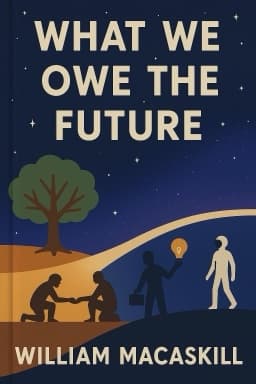
Longtermism Exposed: The Shocking Truth About Why Future Generations Demand Our Attention Now
Uncover the hidden reasons why the distant future is more important than you think—and what it means for humanity’s survival.

The Overlooked Majority: Why Future People Matter
It may surprise you to learn that the vast majority of human lives have yet to be born. If humanity lasts just a million years at current population levels, future generations will outnumber us ten thousand to one. This means the interests of those not yet alive carry immense moral weight.
Historical Ripples: How Past Choices Shape Today
Our ancestors’ actions have long-lasting effects, from causing megafauna extinctions to altering the climate through early agriculture. These examples show how even primitive decisions can echo through time.
Moral Revolutions: Fragile Yet Powerful
The abolition of slavery was a monumental moral shift achieved through determined activism against entrenched economic interests. This change was contingent on specific historical conditions and could have been delayed or reversed.
Value Lock-In: The Double-Edged Sword of Technology
While moral change is possible, values can become locked in, creating rigid orthodoxy. Advanced AI introduces the risk that encoded values may be preserved indefinitely, potentially stifling future moral evolution.
The Lifeline of Moral Diversity and Cooperation
Encouraging diverse perspectives, protecting free speech, and fostering migration enrich societies with new ideas and values. Constructive dialogue between opposing groups builds durable solutions and social cohesion.
Existential Risks: The Urgency to Act
Humanity faces grave risks, including nuclear war, engineered pandemics, and climate change. Successes like asteroid detection programs show that mitigation is possible with effort.
Philosophy in Action: Foundations of Longtermism
Longtermism is grounded in ethical frameworks like expected value theory that help us make wise decisions under uncertainty. Common objections—such as discounting future interests or doubting influence—are addressed with reasoned arguments emphasizing the stakes.
Don’t overlook the future. Our choices today can echo through eternity, shaping a legacy of justice and kindness for all who follow.
Want to explore more insights from this book?
Read the full book summary