
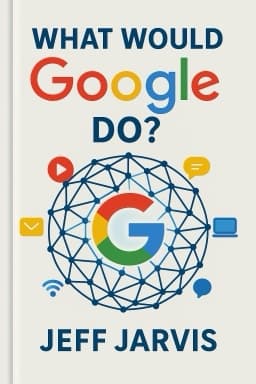
Why Google’s Business Model Is the Ultimate Playbook for the Digital Age
Unpacking the genius behind Google’s success and how to apply its principles to your business.

Google’s meteoric rise is no accident; it is the result of a carefully crafted business model that embraces the realities of the internet era. Jeff Jarvis’s What Would Google Do? reveals how Google’s principles offer a blueprint for success in a world where information flows freely and customers hold the reins.
Central to Google's strategy is the concept of network effects. As more users join and contribute, the platform becomes more valuable for everyone. This creates a self-reinforcing cycle of growth and innovation. Unlike traditional businesses that rely on scarcity, Google thrives on abundance—more data, more users, more content.
Another key aspect is openness and platform thinking. Google opens its APIs and tools to developers worldwide, enabling a vast ecosystem of applications and services. This approach leverages external creativity and accelerates innovation beyond what a single company could achieve alone. For example, Google Maps’ open platform allowed developers to create mashups that combined maps with real estate listings or local events, delivering new value to users.
Customer empowerment is a cornerstone. Google puts users first, providing transparency, easy access to information, and control over their data and preferences. This builds trust and loyalty. The company’s advertising model, based on relevance and user data, contrasts sharply with traditional intrusive ads, making marketing more effective and less disruptive.
Transparency and searchability are also emphasized. Google’s success depends on being easily found and understood by users. Businesses that ignore these principles risk invisibility. The rise of content optimized for search engines demonstrates the power of clarity and accessibility.
The Long Tail economy further reshapes markets. Google’s platforms enable niche products and services to find their audiences, collectively creating massive economic impact. This democratization of opportunity allows small players to compete alongside giants.
The gift economy and culture of sharing underpin many Google projects. Open source software, collaborative knowledge bases, and user-generated content all thrive on generosity and community spirit, driving innovation and trust.
Marketing has evolved into a two-way conversation. Customers act as advocates, sharing their experiences and values. Google’s social platforms amplify authentic voices, reducing reliance on traditional advertising and fostering genuine engagement.
Finally, the culture of learning from mistakes, embracing beta releases, and maintaining humility is vital. Google’s iterative approach allows rapid improvement and adaptation in a fast-changing environment.
In conclusion, Google’s business model is a powerful playbook for any organization navigating the digital age. By embracing networks, openness, customer empowerment, transparency, abundance, sharing, and continuous learning, businesses can innovate and grow sustainably.
Adopting these principles is not just about technology but a fundamental shift in mindset and culture that prepares organizations for the future.
References: Insights from What Would Google Do? and supporting analyses from Goodreads, Amazon, Blinkist, and Information Research 1 2 3 4 .
Want to explore more insights from this book?
Read the full book summary