
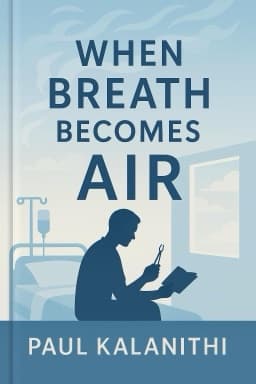
Facing Death as a Doctor: The Unforgettable Journey in 'When Breath Becomes Air'
How a Neurosurgeon’s Final Chapter Teaches Us About Life, Death, and What Truly Matters

Introduction: A Life at the Crossroads of Medicine and Mortality
Paul Kalanithi’s memoir is a rare and powerful exploration of what it means to face death while standing at the pinnacle of medical knowledge and skill. As a neurosurgeon, he was intimately familiar with life’s fragility, yet when diagnosed with terminal lung cancer, he experienced firsthand the vulnerability that patients endure.
The Foundations: Childhood, Curiosity, and the Choice of Medicine
Raised in a desert environment, Kalanithi’s early life was marked by a blend of scientific curiosity and literary passion. This duality shaped his intellectual development and set the stage for his decision to pursue medicine. His unique background allowed him to approach the study of life not only through biology but also through the lens of philosophy and literature, enriching his understanding of human existence.
The Intensity of Medical Training
During his neurosurgical residency, Kalanithi confronted the immense responsibility of operating on the brain, where millimeters can mean the difference between life and irreversible loss of identity. The grueling hours and emotional weight tested his resilience and deepened his appreciation for the delicate balance between saving lives and preserving the essence of the person.
From Physician to Patient: Navigating Illness and Identity
The diagnosis of terminal cancer forced a profound reevaluation of self. Kalanithi’s experience as a patient illuminated the emotional and existential challenges that come with illness, including the uncertainty of prognosis and the shifting dynamics of family and social support.
Philosophical Reflections on Meaning and Mortality
Faced with his own mortality, Kalanithi delves into questions of what makes life worth living. He emphasizes that meaning arises from relationships, love, and the pursuit of purpose rather than mere survival. Language and communication become central themes, as they are vital to identity and connection.
Legacy, Love, and the Human Spirit
In his final chapters, Kalanithi reflects on the courage required to face death openly and the enduring power of love and family. Writing his memoir became an act of legacy, transforming personal tragedy into a universal message of hope.
The Transformative Power of Time and Presence
The perception of time shifts dramatically in illness, compressing the future and magnifying the present. Mindfulness and presence become tools for finding peace and meaning amid suffering, highlighting how even the smallest moments can be profound.
Conclusion: Embracing Mortality to Live Fully
Kalanithi’s memoir culminates in a meditation on mortality as an intrinsic part of life that shapes meaning and urges us to live intentionally. His legacy, carried through memories, love, and influence, offers a lasting presence beyond physical life.
Through 'When Breath Becomes Air,' Paul Kalanithi leaves an indelible mark on readers, inviting us to confront our own mortality and embrace the fullness of life with grace and purpose.
Want to explore more insights from this book?
Read the full book summary