
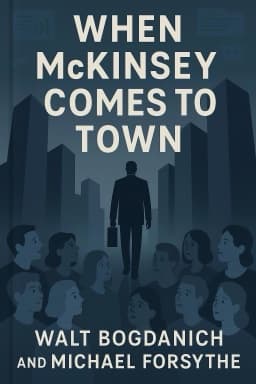
McKinsey’s Dark Secrets: How the World’s Top Consulting Firm Fueled Inequality and Crisis
Unveiling the hidden truths behind McKinsey & Company’s global influence and ethical dilemmas

Imagine a firm so prestigious that it recruits only the top 1-2% of applicants from elite universities, promising to change the world through consulting. This is McKinsey & Company, a global powerhouse whose stated values emphasize putting client interests first and maintaining the highest ethical standards. But beneath this polished veneer lies a complex reality marked by profit-driven decisions and ethical quandaries.
McKinsey’s influence in corporate America has been profound and controversial. The firm’s research and advice played a pivotal role in normalizing the dramatic rise in CEO pay, which ballooned from 20 times the average worker’s salary in 1950 to an astonishing 351 times by 2020. This shift fueled economic inequality and reshaped the social contract between employers and employees, as cost-cutting measures led to mass layoffs, offshoring of jobs, and the decline of unions. Communities once thriving on stable manufacturing jobs faced economic decline, while corporate executives enjoyed unprecedented wealth.
McKinsey’s role extended beyond corporations into government, where it secured lucrative contracts often without competitive bidding. The firm advised both regulators and the companies they regulate, raising serious conflicts of interest. Its work in Medicaid reform, immigration enforcement, and other social services shaped policies that affected millions, often emphasizing efficiency and cost-cutting over human-centered care. Confidential contracts and secrecy clauses further obscured transparency and accountability.
Perhaps most troubling is McKinsey’s involvement in public health crises, notably the opioid epidemic. Internal documents revealed that the firm advised manufacturers like Purdue Pharma to aggressively 'turbocharge' opioid sales, even as addiction and overdose deaths soared. This consulting advice contributed directly to one of the deadliest public health disasters in recent history, culminating in McKinsey paying over $600 million in settlements and issuing rare public apologies. The firm’s work with tobacco and vaping companies, as well as immigration enforcement agencies, further highlights the ethical tensions between profit motives and societal harm.
Industrial and entertainment sectors also felt the impact of McKinsey’s cost-cutting strategies. Maintenance layoffs at steel plants and Disneyland led to fatal accidents, underscoring the human cost of prioritizing efficiency over safety. These tragedies sparked protests and raised urgent questions about corporate responsibility.
Globally, McKinsey’s reach includes advising authoritarian regimes, navigating geopolitical tensions, and facing internal employee dissent over ethical concerns. The firm’s ability to operate in complex political environments demonstrates strategic adaptability but also challenges its commitment to human rights and transparency.
In recent years, McKinsey has faced leadership changes and increased employee activism demanding reform. New codes of conduct and client vetting policies aim to prevent future ethical breaches, but skepticism remains. The consulting industry as a whole grapples with balancing profit, transparency, and social accountability in a rapidly changing world.
This exploration reveals that behind every strategic recommendation and financial metric lies a human story—workers, families, and communities shaped by decisions made in boardrooms. As McKinsey confronts its past and looks to the future, the imperative is clear: consulting must evolve to serve not just clients, but society at large.
For more detailed investigations and official reports on McKinsey’s role in the opioid crisis and government conflicts, see sources such as the House Oversight Committee report, ProPublica, and MBAKnowledge.net. 1 2 3
Want to explore more insights from this book?
Read the full book summary