
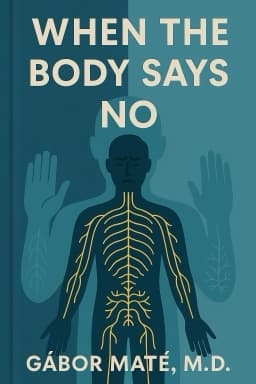
Unlocking the Silent Killer: How Hidden Stress and Repressed Emotions Sabotage Your Health
Discover the invisible forces that quietly erode your wellbeing and how to reclaim your health through emotional awareness.

Every day, countless individuals suffer from chronic illnesses that seem to have no clear cause. What if the root of many of these ailments lies not in external pathogens or genetic fate, but in the silent, invisible burden of hidden stress and repressed emotions?
Hidden stress is a physiological phenomenon where the body endures ongoing tension and immune suppression without conscious awareness. Unlike the stress we feel during a crisis, this form of stress quietly erodes our health from within. Scientific studies reveal that even when unconscious or anesthetized, the body’s stress response can suppress immune function, paving the way for autoimmune diseases, cancer, and other chronic conditions. This is the body’s way of saying no when the mind cannot express its distress.
Emotional repression, often learned in childhood as a survival mechanism, compounds this problem. When individuals are conditioned to suppress feelings like anger or sadness, these emotions do not disappear; instead, they become trapped within the physiology, perpetuating harmful stress cycles. The connection between mind and body is inseparable, with emotions influencing hormonal secretions, immune activity, and even gene expression.
The biological machinery behind this process involves the hypothalamic-pituitary-adrenal (HPA) axis, which regulates cortisol release. While cortisol helps us survive acute stress, chronic activation leads to immune suppression, ulcers, high blood pressure, and bone loss. Real-life examples demonstrate this clearly: individuals under relentless work pressure or emotional neglect develop serious illnesses despite healthy lifestyles.
Developing emotional competence— the ability to recognize, express, and manage emotions — is critical for breaking these cycles. This includes understanding the three levels of emotion: physiological changes, outward expression, and subjective experience. Suppressing anger, in particular, is strongly linked to increased disease risk.
Early life experiences and family dynamics play a pivotal role in shaping these emotional patterns. Children raised in emotionally neglectful or conflict-ridden environments often adopt roles like caretaker or peacemaker, repressing their true feelings to maintain family harmony. These roles become ingrained personality traits, increasing vulnerability to chronic stress and illness later in life.
Moreover, family emotional legacies transmit stress responses across generations through learned behaviors and blurred boundaries. Understanding these multigenerational patterns empowers individuals to break free from inherited emotional burdens.
The mind-body super-system integrates emotions, hormones, and immunity into a unified network. Cell membranes act as sensory organs, interpreting emotional signals and modulating gene expression. This means our beliefs and perceptions literally shape our biology, challenging the notion that genes alone determine health.
Facing painful truths and embracing honest negative thinking are essential for healing. Denial and forced positivity block emotional processing, prolonging stress and illness. By cultivating awareness and assertiveness — the ability to express needs and set boundaries — individuals can reclaim emotional health and reduce chronic stress.
The Seven A’s of Healing—Acceptance, Awareness, Assertiveness, Anger expression, Autonomy, Attachment, and Allowing—offer a practical framework to restore emotional balance and resilience. Each step addresses key blocks that contribute to hidden stress and disease.
Ultimately, healing is a lifelong journey rooted in awareness and authentic living. By integrating mind and body, embracing emotional truth, and nurturing self-compassion, we unlock the path to vibrant health and wholeness.
This knowledge invites us all to listen deeply to our bodies, honor our emotions, and live authentically — for when the body says no, it is calling us home to ourselves.
Sources: Want to explore more insights from this book?