
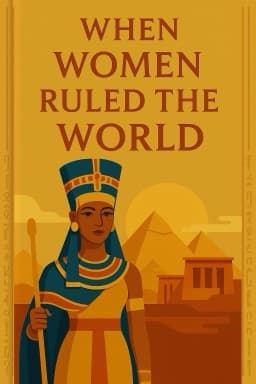
From Divine Queens to Political Survivors: The Rise and Fall of Egypt’s Female Pharaohs
Examining the religious foundations, political crises, and societal resistance faced by Egypt’s women rulers

Ancient Egypt’s political landscape was shaped by a divine kingship ideology that intertwined religion and governance. Central to this was the role of women, who often stepped into power during dynastic crises to protect the throne and ensure continuity.
Merneith’s regency in the First Dynasty exemplifies this tradition. She exercised a dark and terrifying power, orchestrating human sacrifices of hundreds of elite retainers to accompany the deceased king into the afterlife. Her tomb’s grandeur rivaled that of kings, signaling her exceptional status. This practice, while brutal, reinforced the sanctity of the royal line and the divine order.
Centuries later, Tawosret ruled openly as a female king during the turbulent 19th Dynasty. Unlike previous queens who masked their femininity with male titles or regalia, Tawosret boldly embraced her identity, governing alone amid civil unrest. Her reign marked the end of her dynasty and the transition to new powers.
These women’s stories reveal a cyclical pattern: female power was often a pragmatic response to crisis, accepted temporarily but followed by patriarchal efforts to restore male dominance. This tension reflects deep societal ambivalence about female authority, visible in the erasure and rewriting of their legacies.
Understanding these dynamics enriches our comprehension of ancient political systems and offers valuable perspectives on ongoing gender struggles. The resilience and leadership of Egypt’s female pharaohs continue to inspire debates on power, identity, and history.
Sources: Amazon (When Women Ruled the World), 20MinuteBooks summary, DCCCD Library Catalog 1 3 4
Want to explore more insights from this book?
Read the full book summary