
7 Surprising Secrets Behind Every Genius Idea (And How You Can Use Them!)
Unlocking the Patterns of Genius from 'Where Good Ideas Come From'

Unlocking the Patterns of Genius from 'Where Good Ideas Come From'
What if the next big idea isn’t locked away in a lone genius’s mind, but hidden in the world around you—waiting for the right environment to set it free? In Steven Johnson’s 'Where Good Ideas Come From,' we discover that innovation is less about eureka moments and more about the invisible patterns that connect us all. Here are the seven secrets, based on Johnson’s research and stories from science, history, and the modern world.
1. The Adjacent Possible: Your Next Step is Closer Than You Think
Every breakthrough is built on what came before. The 'adjacent possible' is the map of all the next steps available from your current position. Imagine a house where each room you enter creates new doors—every discovery expands your universe. This is true in biology (life evolving from simple to complex), technology (the web emerging from earlier networks), and even your daily life. Tip: Seek out new combinations of things you already know.
2. Liquid Networks: Where Ideas Flow and Collide
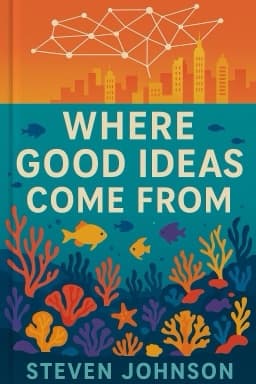
Dense, flexible networks—like cities, labs, or even your brain—are where creativity flourishes. Johnson compares these to coral reefs: environments where diverse elements interact, recycle resources, and make new life possible. The more connected your environment, the more likely you are to stumble upon something new. Tip: Join communities, attend events, and mix with people outside your usual circles.
3. The Slow Hunch: Patience Pays Off
Most big ideas don’t arrive fully formed. They start as slow hunches—vague feelings or questions that take months or years to mature. Charles Darwin’s theory of evolution, for example, took years of note-taking and reflection before it crystallized. Keep a journal, revisit your ideas, and let them simmer. Tip: Don’t rush your creativity—let your hunches grow.
4. Serendipity and Error: The Power of Happy Accidents
Some of the greatest discoveries—like penicillin and the pacemaker—were born from mistakes. Environments that tolerate error and encourage wandering minds are more likely to produce breakthroughs. Tip: Allow yourself to fail, and pay attention to accidents.
5. Exaptation: Old Tools, New Tricks
Feathers evolved for warmth before they enabled flight. The printing press borrowed from wine-making. Many inventions are born when something designed for one purpose is repurposed for another. Tip: Look at your tools and habits—what else could they do?
6. Platforms: The Springboards of Progress
Platforms—like coral reefs, the web, or cities—are foundations that support waves of innovation. They allow others to build on top of them, creating new possibilities. Tip: Build or join platforms that invite collaboration.
7. Subcultures and Spillover: Diversity Drives Discovery
Innovation blooms in diverse environments. Subcultures nurture unique ideas, which often spill over to the mainstream. Hip-hop, open-source software, and street art all started in niche groups. Tip: Embrace diversity and seek inspiration from outside your field.
Conclusion: Build Your Own Ecosystem
Innovation isn’t magic—it’s a pattern. By creating environments that are open, diverse, tolerant of error, and constantly evolving, you can unlock your own creative potential. Every good idea is a network—so start building yours today.
Want to explore more insights from this book?
Read the full book summary