
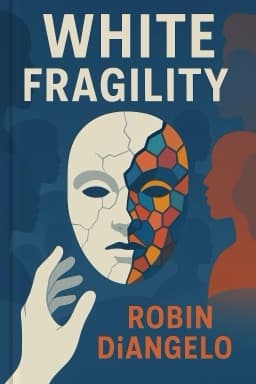
Unlocking the Hidden Truths of White Fragility: Why This Book Will Change How You See Race Forever
A deep dive into Robin DiAngelo's groundbreaking exploration of whiteness, racial discomfort, and systemic racism.

In a society deeply divided by race, understanding the invisible forces that shape racial dynamics is essential. Robin DiAngelo's 'White Fragility' offers a compelling lens through which to view the often unseen ways whiteness operates as the default racial identity, shaping perceptions and experiences without conscious awareness. This concept of whiteness as an invisible norm means that white people frequently do not recognize their own racial identity or the privileges it confers.
Race itself is not a biological fact but a social construct, created historically to justify exploitation and maintain power hierarchies. White supremacy is not limited to extremist groups but is a systemic structure embedded in institutions, laws, and cultural norms, perpetuating racial inequalities across generations. This system grants unearned advantages to white people in areas like education, healthcare, and employment, often invisible to those who benefit from them.
As overt racism became socially unacceptable, racism evolved into subtler forms such as color-blindness—the ideology that ignoring race will end racism—and aversive racism, where unconscious biases influence behavior despite conscious egalitarian beliefs. These adaptations allow systemic racism to persist under the guise of fairness and neutrality.
White fragility arises when white racial comfort is challenged, triggering defensive responses like anger, denial, withdrawal, or emotional displays. These reactions serve to silence conversations about race and restore white comfort, maintaining the racial status quo. Importantly, white fragility is not a sign of personal weakness but a mechanism of control rooted in entitlement and superiority.
The moral framing of racism as a trait of bad people further complicates matters. This 'good/bad' binary allows many white individuals to deny their complicity in systemic racism, responding defensively to racial critiques to protect their moral self-image. Overcoming this barrier requires moving beyond simplistic moral judgments to understand racism as a collective social dynamic.
Central to systemic racism is anti-blackness, a specific and deeply entrenched form of dehumanization and exclusion targeting black people. Media representations, social policies, and cultural narratives reinforce negative stereotypes and fears, justifying inequalities and shaping white identity in opposition to blackness.
To move beyond fragility, individuals must build racial stamina—the capacity to endure discomfort, receive feedback without defensiveness, and engage in honest dialogue. This lifelong journey involves humility, courage, and commitment to sustained antiracist action, including acknowledging harm, repairing relationships, and challenging white solidarity that resists change.
Robin DiAngelo's 'White Fragility' challenges readers to confront uncomfortable truths with openness and responsibility. By recognizing whiteness, understanding systemic racism, and interrupting defensive responses, we can begin to dismantle the structures that uphold racial injustice and work toward a more equitable society.
Embarking on this path is not easy, but it is vital for healing and transformation. The insights shared in this blog and the book itself offer a roadmap for those willing to face discomfort and embrace growth in the pursuit of racial justice.
Want to explore more insights from this book?
Read the full book summary