
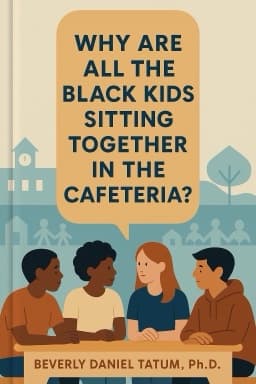
Why Do Black Kids Sit Together? Exploring Adolescent Racial Identity and Peer Clustering
Understand the developmental and social reasons behind racial clustering in schools and its impact on identity formation.
One of the most common questions asked about racially mixed schools is, "Why are all the Black kids sitting together in the cafeteria?" This observation reveals a deeper developmental process related to racial identity formation during adolescence.
During elementary school, children often play across racial lines with relative ease. However, as they enter middle and high school, puberty brings heightened self-awareness and a stronger desire to understand their identity. Adolescents begin to explore what it means to belong to a particular racial group amid societal messages and personal experiences of racism and exclusion.
For many Black adolescents, this leads to the adoption of an oppositional identity — a way to resist dominant cultural norms and affirm their own community and values. This identity can serve as a protective mechanism but may also create tensions around academic achievement, where excelling is sometimes perceived as 'acting White.'
Understanding these dynamics is crucial for educators, parents, and policymakers striving to create supportive environments that validate diverse identities and encourage academic success. Programs that foster cultural pride and provide positive role models help young people navigate these challenges and develop empowered racial identities.
This phase of identity development is a natural and important part of growing up in a racially stratified society. Recognizing and supporting adolescents through this process promotes resilience and social cohesion.
Sources and further reading: Resources on racial identity development and adolescent psychology offer detailed insights into these phenomena, highlighting the importance of culturally responsive education. 2
Want to explore more insights from this book?
Read the full book summary