
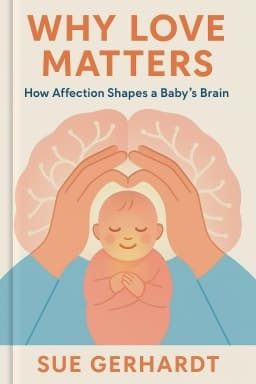
Why Love Matters: The Surprising Science Behind Your Child’s Brain
Unlocking the secrets of how affection shapes a child’s future

Unlocking the secrets of how affection shapes a child’s future
Imagine if every hug, every soothing word, and every moment of play with a baby was not just a fleeting act of care, but a powerful investment in their lifelong happiness, intelligence, and health. This is the central revelation of 'Why Love Matters,' a groundbreaking book that brings together decades of neuroscience, psychology, and real-world stories to show that love is not just a feeling—it’s a biological force that literally builds brains.
In the earliest months and years of life, a child’s brain is like a construction site in overdrive. Neural pathways form at a staggering rate, guided by the quality of interactions with caregivers. Responsive, affectionate care triggers the release of neurotransmitters that grow the prefrontal cortex—the seat of empathy, self-control, and intelligence. In contrast, chronic stress or neglect floods the body with cortisol, shrinking key brain regions and setting the stage for anxiety, learning difficulties, and even physical illness later in life. Every cuddle and comforting response is a message to the child’s developing brain: you are safe, you are valued, and the world is a good place.
Attachment theory, pioneered by John Bowlby and expanded by modern neuroscience, explains how these early bonds become the blueprint for all future relationships. Secure attachment, built through consistent love and emotional availability, leads to children who are confident, resilient, and socially skilled. Insecure or disorganized attachment, often the result of unpredictable or harsh care, can lead to a lifelong struggle with trust, self-worth, and emotional regulation.
But the story doesn’t end with the family. 'Why Love Matters' highlights how society as a whole can nurture or undermine these vital early bonds. Countries that invest in parental leave, high-quality childcare, and community supports see lower rates of mental illness and greater academic success. The ripple effects are profound: every dollar spent on early childhood returns sevenfold in productivity, health, and reduced crime. Love, it turns out, is not just a private affair—it’s a public good.
For parents, the message is both reassuring and empowering. You don’t need to be perfect—just present, responsive, and loving. The brain’s plasticity means that even after adversity, healing is possible through new, positive relationships and experiences. For educators, policymakers, and anyone who cares about the next generation, the call to action is clear: create environments where every child can thrive, surrounded by love and safety.
In summary, 'Why Love Matters' is a clarion call to recognize the true power of love—not as a luxury, but as the foundation of human flourishing. By valuing and supporting the emotional needs of our youngest, we build a brighter, kinder, and more resilient future for all.
Want to explore more insights from this book?
Read the full book summary