
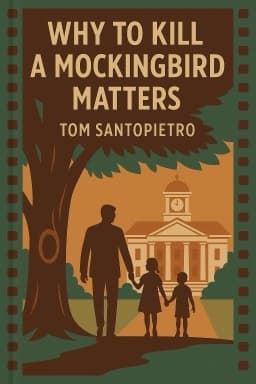
The Untold Legacy of ‘To Kill a Mockingbird’: From Southern Roots to Global Icon
How a Small-Town Story Became a Worldwide Phenomenon

Every classic has an origin story, and the tale behind ‘To Kill a Mockingbird’ is as compelling as the novel itself. Born Nelle Harper Lee in the small town of Monroeville, Alabama, the author grew up surrounded by the rhythms and contradictions of the Deep South. Her father, a respected lawyer, and her childhood friend, the future author Truman Capote, would both leave indelible marks on her imagination. The courthouse at the center of Monroeville became the blueprint for Maycomb, while the town’s stories of kindness and cruelty, courage and cowardice, shaped the world of Scout, Jem, and Atticus.
The journey from draft to publication was anything but smooth. Lee’s original manuscript, ‘Go Set a Watchman,’ focused on an adult Scout and was transformed through years of editorial collaboration into the childhood narrative we know today. The novel’s success was immediate and overwhelming, winning the Pulitzer Prize and selling millions of copies in its first years. But the story didn’t stop there. ‘To Kill a Mockingbird’ has since been translated into over 40 languages and adapted into a beloved film and, more recently, a Broadway play.
What makes the legacy of ‘To Kill a Mockingbird’ so powerful is its ability to transcend its origins. While rooted in the specifics of Southern life, the novel’s themes—justice, empathy, the loss of innocence—resonate with readers everywhere. In classrooms from Tokyo to Cape Town, students grapple with Scout’s questions and Atticus’s integrity. The story’s adaptability, from the silver screen to the stage, ensures that each new generation finds its own meaning in Lee’s words.
Behind the accolades and adaptations, however, lies a quieter legacy: the way the novel has inspired writers, activists, and ordinary readers to believe in the power of story. Harper Lee’s refusal to publish another novel for decades only deepened the mystique, making ‘To Kill a Mockingbird’ not just a book, but a touchstone for what literature can achieve.
In tracing the legacy of this remarkable work, we are reminded that the most local stories often have the widest reach. The mockingbird’s song, born in a small Southern town, continues to echo around the world.
References: Raising Arizona Kids, Britannica, NY Times
Want to explore more insights from this book?
Read the full book summary