
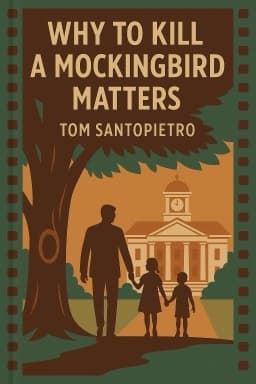
Why ‘To Kill a Mockingbird’ Still Resonates: Lessons for a Divided World
How Harper Lee’s Classic Novel Holds Up a Mirror to Our Times

Few novels have carved as deep a mark on the American conscience as Harper Lee’s ‘To Kill a Mockingbird.’ Set in the sleepy town of Maycomb during the 1930s, the novel unfolds through the eyes of Scout Finch, a precocious girl whose father, Atticus, becomes the unlikely defender of a Black man falsely accused of a terrible crime. The book’s enduring power lies not only in its gripping courtroom drama but in its subtle, everyday lessons about decency, empathy, and the courage to do what is right even when the world stands against you. In the decades since its publication, the novel has become a staple in school curriculums and a touchstone for conversations about justice and prejudice.
Why does this story, anchored in a specific time and place, continue to move readers around the globe? Part of the answer lies in its characters. Atticus Finch, with his quiet dignity and unwavering sense of justice, has inspired generations to believe that one voice can make a difference. Scout’s journey from innocence to understanding mirrors the reader’s own awakening to the complexities of human nature. And Boo Radley, the mysterious neighbor, reminds us that kindness often hides behind misunderstood silence.
But the novel’s resonance goes deeper. In a world still grappling with racial inequality and social division, ‘To Kill a Mockingbird’ challenges us to confront uncomfortable truths about our communities and ourselves. Teachers have shared countless stories of students who, after reading the book, began to see their own neighborhoods differently—questioning stereotypes, standing up for classmates, or reaching out to those who seemed ‘other.’
Yet, the novel is not without controversy. Some critics argue that its portrayal of Black characters is limited, or that it centers white perspectives in the struggle for justice. These debates, far from diminishing the book’s value, highlight its role as a living text—one that invites reflection, disagreement, and growth. In many ways, the ongoing conversations about ‘To Kill a Mockingbird’ are proof of its vitality.
Ultimately, the novel’s greatest gift may be its insistence on empathy—the call to ‘climb into another person’s skin and walk around in it.’ In a divided world, that lesson is as urgent now as it was in 1960. Whether read for the first time or the fiftieth, ‘To Kill a Mockingbird’ continues to open hearts, challenge minds, and inspire hope for a more just future.
References: Facing History and Ourselves, NY Times, Britannica
Want to explore more insights from this book?
Read the full book summary