
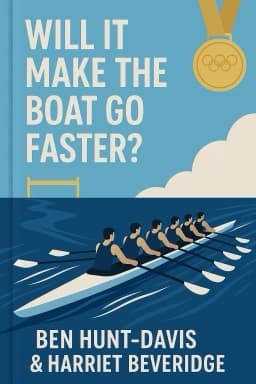
Why Most People Fail at Motivation — And How This Book Fixes It
Discover the hidden reasons motivation slips and the practical solutions to keep your fire burning.

Motivation is a slippery beast. One day you wake up ready to conquer the world; the next, you can barely drag yourself out of bed. Why does motivation come and go like this? And more importantly, how can we keep it alive? Ben Hunt-Davis’s Will It Make the Boat Go Faster? offers surprising answers.
The first revelation is that motivation isn’t logical. It attaches itself to daft endeavors and ignores things you should do. This explains why you might feel motivated to learn a new language one day and binge-watch TV the next.
But there’s hope. The book outlines eight powerful techniques to nurture motivation:
- Believe: Cultivate belief in your goal’s importance and your ability to achieve it.
- Make the journey fun: Inject humor, playfulness, and enjoyment into your efforts.
- Get competitive: Use friendly rivalry to push yourself.
- Make yourself hungry: Create a sense of wanting that fuels effort.
- Daydream: Visualize success vividly to strengthen desire.
- Flick the switch: Consciously shift your mindset to focus and action.
- Create milestones: Break goals into measurable steps and celebrate wins.
- Use the ten-minute rule: Commit to just ten minutes to overcome procrastination.
These techniques are not theoretical; they are battle-tested by Olympic athletes who faced grueling training and intense pressure. For example, one athlete used competition within the team to push beyond limits, while another used daydreaming to emotionally connect to the goal.
Understanding motivation’s fickle nature and arming yourself with a toolbox of strategies transforms your relationship with effort.
Whether you’re struggling to start a project, maintain fitness, or pursue long-term dreams, these insights offer practical, actionable ways to keep your fire burning bright.
Next, we’ll explore the foundational beliefs that fuel motivation and how to build them deliberately.
Want to explore more insights from this book?
Read the full book summary