
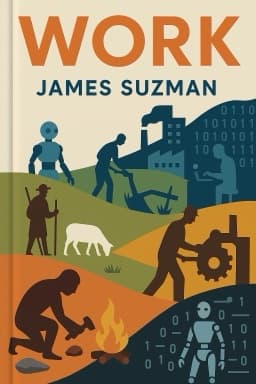
Are Robots Saving Us or Stealing Our Souls? Automation, Anxiety, and the Future of Work
What the Age of Robots Can Learn from the Stone Age

What the Age of Robots Can Learn from the Stone Age
The rise of robots and artificial intelligence is transforming work in ways that would astonish our ancestors. But while fears of job loss and purposelessness dominate headlines, James Suzman’s Work reminds us that anxiety about automation is nothing new. When the first spinning jennies appeared, workers smashed them in protest, fearing for their livelihoods. Yet, each technological revolution has also created new kinds of work, often in areas no one could have predicted.
The real challenge, Suzman argues, is not how to keep everyone employed, but how to share the fruits of automation fairly and redefine the meaning of work. Experiments with universal basic income in Finland and Canada show that when freed from the daily grind, people often turn to creativity, learning, and care. The future may belong to those who can adapt, collaborate, and find purpose beyond the paycheck.
As we stand on the threshold of abundance, the lessons of the Stone Age—community, sharing, and meaningful activity—are more relevant than ever. The task is not to resist change, but to shape it for the benefit of all.
References: Suzman, J. (2021); policy experiments and reviews cited in Beshara Magazine and SoBrief.
Want to explore more insights from this book?
Read the full book summary