
Why Your To-Do List Isn’t Working—And What Actually Does
Discover the science behind failed to-do lists and the powerful alternatives that transform your productivity.
Discover the science behind failed to-do lists and the powerful alternatives that transform your productivity.
For years, we’ve been told that the secret to getting more done is a better to-do list. Buy a new planner, download the latest app, color-code your tasks, and—voilà!—you’ll finally conquer the chaos. But if you’re like most people, your enthusiasm fades after a few weeks. The lists pile up, unchecked boxes multiply, and guilt sets in. Why does this happen?
Research shows that the majority of people abandon new productivity systems quickly, not because they lack willpower, but because these systems are too rigid, impersonal, and disconnected from how real human brains work. Instead of making us more effective, traditional to-do lists often amplify our stress and sense of failure. The truth is, there is no one-size-fits-all solution. Productivity is deeply personal.
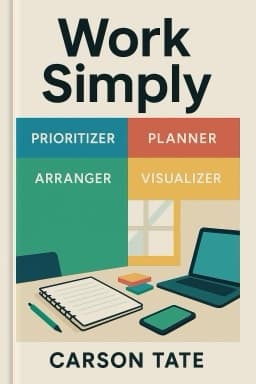
Recent studies and expert books highlight four distinct productivity styles: the analytical Prioritizer, the organized Planner, the collaborative Arranger, and the big-picture Visualizer. Each style has unique strengths and needs. For example, a Prioritizer thrives on data and logic, benefiting from streamlined digital lists and clear priorities, while a Visualizer may need mind maps and visual boards to spark creativity. Arrangers flourish in collaborative settings, using shared calendars or team check-ins, while Planners love detailed agendas and structured routines.
One of the biggest productivity traps is multitasking. Neuroscience reveals that switching between tasks reduces efficiency by up to 40% and increases errors. Our brains are wired for focus, not constant switching. Yet, digital distractions—emails, notifications, social media—constantly hijack our attention, driven by dopamine’s reward loop. The average worker is interrupted every three minutes, and it can take up to 23 minutes to regain full focus.
To break free, experts recommend designing your environment for focus: mute notifications, set boundaries, and use external systems to capture tasks. Try the “stoplight” method—red for deep work, yellow for limited interruptions, green for open collaboration. Physical state matters, too; hunger and fatigue make you more distractible, so take care of your body as well as your mind.
Ultimately, the most effective productivity system is the one you’ll actually use. Align your tools with your natural style, experiment with digital and analog methods, and be gentle with yourself. Productivity isn’t about doing more; it’s about doing what matters, with clarity and calm.
Ready to ditch the guilt and discover what works for you? Start by identifying your style, decluttering your mind with a master task list, and building an environment that supports your best work. Your to-do list is about to get a whole lot smarter—and so are you.
For more on this topic, see the latest expert picks in productivity books and research.
Want to explore more insights from this book?
Read the full book summary