
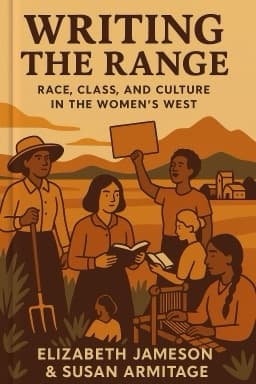
The Untold Stories of the Women's West: How 'Writing the Range' Redefines American History
Discover How This Groundbreaking Book Shatters Old Myths and Celebrates Hidden Voices

For generations, the story of the American West was told through a narrow lens: a vast, empty frontier conquered by rugged, white men. Cowboys, lawmen, and gold miners filled our textbooks and movie screens, while the voices of women—and especially women of color—were left in the shadows. 'Writing the Range: Race, Class, and Culture in the Women's West' turns this old narrative upside down, inviting us to see the West as a place of vibrant diversity, struggle, resilience, and creativity.
The Myth of 'Hisland'—and Why It Matters
Imagine learning about a land where only men mattered—where women and people of color were invisible. This is the myth of 'Hisland,' a term coined by feminist historians to critique the traditional, male-dominated accounts of the West. The editors of 'Writing the Range' argue that this myth has shaped not only our understanding of history, but also our laws, politics, and culture. By focusing on cowboys and outlaws, we miss the everyday acts of courage, negotiation, and care that built communities and changed lives.
Everyday Acts, Extraordinary Change
One of the most powerful ideas in the book is that history is made in kitchens, gardens, and schoolhouses—not just in battlefields or government offices. The essays show how women’s unpaid labor—cooking, cleaning, child-rearing, and community organizing—was the backbone of Western society. These acts, often invisible, were crucial for survival and for building the institutions that would shape generations to come. The book gives moving examples: a Mexican widow negotiating land rights, Black women founding clubs to fight segregation, and Native mothers passing on languages and traditions.
Intersectionality: The Real Western Experience
Race, class, and gender are not just boxes to check—they are lived realities that overlap and change over time. The anthology explores how these categories were constructed and manipulated, sometimes to include, sometimes to exclude. Who counted as 'white' could shift from one town to the next. A Chinese woman’s experience differed from that of an Irish widow or a Native grandmother, yet all navigated a complex web of expectations and obstacles. These stories reveal the true diversity and dynamism of the West.
Resistance, Renewal, and Reclaiming the Narrative
The book is filled with examples of women resisting oppression—sometimes through public protest, sometimes through everyday acts of defiance. Mothers in East Los Angeles organized to protect their children’s schools; Native women blocked toxic waste dumping on reservations; others used the courts to fight for land and family rights. Equally important, the book shows how women of color have challenged stereotypes by creating new stories, art, and poetry that celebrate survival and pride.
Why This Book Matters Now
'Writing the Range' is not just a history lesson—it is a call to action. Its influence can be seen in classrooms, public art, and policy debates across the West. By including poetry and autobiography alongside traditional essays, the book invites everyone to see themselves as part of history—and to take up the work of telling their own stories. In a time when debates over representation, memory, and justice are as heated as ever, this book offers a model for how to build a more inclusive, truthful, and hopeful future.
Ready to see the West with new eyes? Dive into 'Writing the Range' and join the conversation.
Want to explore more insights from this book?
Read the full book summary