
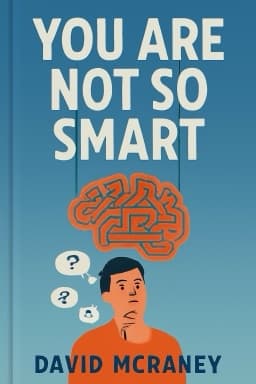
Why You’re Not as Smart as You Think: 7 Mind Tricks Exposed
Unmasking the cognitive illusions that fool even the smartest minds.

Despite our best intentions, our minds are riddled with illusions that skew our sense of reality. David McRaney’s You Are Not So Smart brilliantly uncovers these hidden biases, showing that intelligence is no safeguard against self-delusion. Here are seven mind tricks from the book that reveal why you’re often not as smart as you think.
1. Confirmation Bias
We seek information that confirms our existing beliefs and ignore contradicting evidence. This bias is why social media can create echo chambers and why debates often feel like talking past each other.
2. Hindsight Bias
After an event, we convince ourselves we predicted it all along. This illusion of inevitability reduces our ability to learn from mistakes.
3. The Texas Sharpshooter Fallacy
We find patterns in randomness by drawing targets around clusters of data, leading to false conclusions about causality.
4. Priming
Subtle environmental cues influence our behavior unconsciously, such as business objects making people act greedier.
5. Confabulation
Our brains fabricate explanations for actions and memories to maintain a coherent self-image, even if the stories are false.
6. Normalcy Bias
In emergencies, we underestimate danger and freeze, delaying critical responses.
7. Present Bias and Procrastination
We overvalue immediate rewards and delay important tasks, sabotaging our future goals.
Understanding these biases empowers you to recognize when your mind is playing tricks and take steps to counteract them. This knowledge is supported by extensive psychological research and real-world examples discussed in McRaney’s book and expert reviews.
By becoming aware of these mental pitfalls, you can cultivate critical thinking, improve decision-making, and live more authentically.
For deeper insights, see detailed analyses on Medium, Greg Low’s blog, and Samuel Thomas Davies. 1 2 4
Want to explore more insights from this book?
Read the full book summary