
Stop Believing Every Thought: The Surprising Truth About Your Brain’s Lies
Discover how to break free from the automatic messages that keep you stuck.

Discover how to break free from the automatic messages that keep you stuck
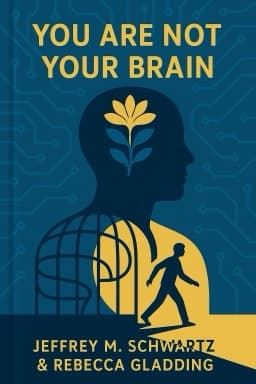
Have you ever found yourself caught in a loop of negative thoughts, self-doubt, or unhealthy cravings, wondering why your mind seems to work against you? You’re not alone. For decades, neuroscience has shown that our brains are not just passive recorders of experience—they are active creators of thoughts, many of which are misleading or outright false. In their book You Are Not Your Brain, Dr. Jeffrey Schwartz and Dr. Rebecca Gladding introduce the concept of 'deceptive brain messages'—automatic thoughts and urges that do not reflect your true self but are the result of old, ingrained neural patterns. These messages can sound like, 'I’ll never be good enough,' 'I need this to feel better,' or 'Everything will fall apart if I don’t act now.' But here’s the liberating truth: you are not your brain—you are the one who can choose which messages to believe and which to let go.
The Science of Deceptive Brain Messages
Our brains are designed for survival, not happiness. That means they are constantly scanning for threats, replaying past mistakes, and anticipating future dangers. This is helpful when crossing a busy street, but less so when it leads to chronic anxiety or self-sabotage. Research shows that the basal ganglia, amygdala, and insula are heavily involved in generating the physical sensations and emotional alarms that make these messages feel urgent and real. Over time, repeated attention to these thoughts strengthens their neural circuits, making them more automatic and harder to resist. This is known as Hebb’s Law: 'neurons that fire together wire together.' 1 2
Meet the Four Step Method
So how do you break free? Schwartz and Gladding’s Four Step Method is a practical, science-backed approach proven to change the brain’s wiring:
- Relabel: Name the deceptive brain message for what it is. Instead of saying 'I am anxious,' say 'I am experiencing an anxious thought.'
- Reframe: Remind yourself that this thought is not reality, but a brain-generated message.
- Refocus: Shift your attention to a healthy, value-driven activity for at least 15 minutes.
- Revalue: See the thought as unimportant—a false signal not worthy of your time or energy.
Brain imaging studies have shown that using these steps can reduce activity in the brain’s habit and anxiety centers, leading to real, lasting change. Even people who learned the Four Steps from an audio recording experienced significant improvements in anxiety and compulsive behaviors. 1 2
Real Stories, Real Change
Consider the story of a musician paralyzed by performance anxiety. By relabeling his fear as a brain message, reframing its importance, and refocusing on his love for music, he gradually regained his confidence and joy on stage. Or the executive who, plagued by perfectionism, learned to pause, name her critical thoughts, and choose self-compassion over self-criticism. These stories illustrate a universal truth: change is possible for anyone willing to practice, persist, and believe in the power of their own mind.
Why This Matters Now
In a world overflowing with stress, uncertainty, and constant distraction, learning to separate your true self from your brain’s automatic outputs is a superpower. It means you can choose your actions based on your deepest values, not on fleeting urges or fears. It means you can build resilience, break free from old patterns, and live a life that feels authentic and free.
Take the First Step
If you’re ready to stop believing every thought and start living with intention, begin today. Notice your thoughts. Name them. Remember that you have a choice. And above all, treat yourself with the same kindness you would offer a friend. Your brain may send you false messages, but your mind holds the power to choose which ones to follow.
For more science-based strategies and inspiring stories, check out the full summary and key takeaways from You Are Not Your Brain. 1 2 3
Want to explore more insights from this book?
Read the full book summary