
Why Willpower Isn’t Enough: The Hidden Science of Habit Change
Discover why breaking old patterns is so hard—and what really works instead.

Discover why breaking old patterns is so hard—and what really works instead
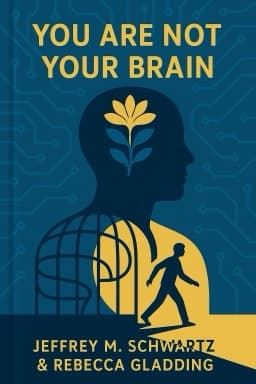
How many times have you promised yourself you’d quit a bad habit, only to fall back into the same routine days or weeks later? It’s easy to blame yourself or your lack of willpower, but neuroscience reveals a deeper truth: habits are not just choices—they are physical circuits in your brain, built through repetition and reinforced by attention. In You Are Not Your Brain, Dr. Schwartz and Dr. Gladding explain that the basal ganglia, a cluster of structures deep in the brain, is responsible for making behaviors automatic. The more you repeat a behavior, the stronger the neural pathway becomes. 1 2
Why Old Habits Die Hard
Every time you act on a thought or urge, you reinforce the neural circuit behind it. This is why habits feel so automatic, even when you consciously want to change. The brain’s efficiency is both a blessing and a curse—it frees up mental energy for new challenges, but makes breaking old patterns incredibly difficult.
The Myth of Willpower
Willpower is like a muscle: it can be depleted by stress, fatigue, or decision overload. That’s why relying on willpower alone almost always leads to frustration and failure. The real key to change is building new habits that are just as automatic as the old ones.
The Power of 'Free Won’t'
Even if you can’t control the first thought or urge, you can choose not to act on it. This is known as 'Free Won’t'—the ability to veto an action before it becomes a habit. By practicing the Four Steps, you gradually weaken the old circuit and strengthen the new one.
Actionable Strategies
- Practice the Four Step Method daily, even with minor habits.
- Celebrate small wins to reinforce new pathways.
- Use reminders and visual cues to support your new routine.
- Seek out supportive environments and communities.
With patience, consistency, and self-compassion, you can overcome even the most stubborn habits. For more science-backed tips and inspiring stories, explore You Are Not Your Brain. 1 2 3
Want to explore more insights from this book?
Read the full book summary