
How Your ‘Risk Fingerprint’ Shapes Every Decision: Lessons from The Gray Rhino
Unlocking the Secret Patterns Behind Your Choices and Fears

Unlocking the Secret Patterns Behind Your Choices and Fears
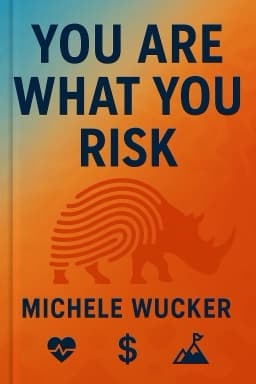
What if your approach to risk—the way you weigh an uncertain job offer, a leap into a new city, or even just whether to speak up in a meeting—was as unique as your fingerprint? In Michele Wucker’s groundbreaking work, including her bestselling The Gray Rhino, she shows that the risks we take or avoid are not accidents. They are the result of a deeply personal, often hidden, pattern: your risk fingerprint.
Your risk fingerprint is the sum of your personality traits, life experiences, cultural background, and even your mood on a given day. Some of us are naturally adventurous, seeing every unknown as an opportunity. Others are more cautious, preferring the safety of the known. But most of us are somewhere in between, shaped by years of subtle influences. Wucker’s research reveals that understanding this fingerprint is the first step to making better decisions—not just in business, but in every aspect of life.
Consider the story of two entrepreneurs faced with the same opportunity: one dives in, energized by the thrill of the unknown, while the other hesitates, haunted by memories of past failures. Their different approaches aren’t just luck or gut feeling—they’re the product of their unique risk fingerprints. And, as Wucker points out, this isn’t just about personality. It’s about upbringing, culture, and even the stories we hear growing up. Did your parents encourage experimentation, or did they warn against danger? Did you grow up in a stable environment, or one marked by uncertainty? All of these factors leave traces, shaping how you respond to risk today.
Understanding your risk fingerprint isn’t about labeling yourself as ‘brave’ or ‘timid.’ It’s about gaining self-awareness. When you know why you hesitate—or why you leap—you can make more conscious choices. You can spot the gray rhinos in your life: the big, obvious risks that everyone else is ignoring, but that could trample your plans if left unchecked. Wucker’s advice is both practical and optimistic: by learning to recognize your patterns, you can train yourself to act before it’s too late, turning risk into a source of growth and opportunity.
So next time you find yourself hesitating—or rushing in—pause and ask: what does my risk fingerprint say about me? And how can I use this knowledge to shape my future?
Ready to dive deeper? In the next post, we’ll explore how your risk fingerprint interacts with others’, and why ‘risk empathy’ is the secret to better relationships and teams.
Want to explore more insights from this book?
Read the full book summary