
Social Credit, Digital IDs, and the End of Privacy: What You Need to Know
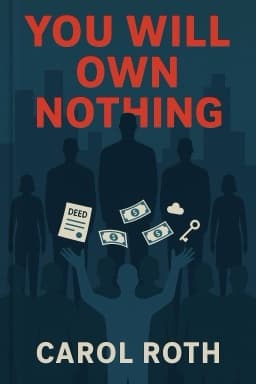
The Hidden Dangers Revealed in ‘You Will Own Nothing’

The Hidden Dangers Revealed in ‘You Will Own Nothing’
In a world obsessed with convenience and efficiency, the rise of social credit systems and digital IDs might seem inevitable. But as Carol Roth warns in ‘You Will Own Nothing,’ these technologies are Trojan horses—tools of surveillance and control that threaten the very foundations of privacy and autonomy.
Roth traces the origins of social credit systems to China, where citizens are scored on everything from bill payments to online speech. Those with high scores enjoy privileges; those with low scores face public shaming, travel bans, and job loss. But this isn’t just a Chinese phenomenon. In the West, digital IDs and vaccine passports are being rolled out, often with little debate. These tools, Roth argues, are the building blocks of a new regime where access to services, employment, and even basic rights depends on compliance with elite-driven agendas.
The book is filled with chilling examples: people denied travel for minor infractions, businesses blacklisted for failing to meet arbitrary standards, and entire communities excluded by algorithmic decree. Roth’s analysis is clear—these systems are not about safety, but about control. The more data is collected, the less room there is for dissent, privacy, or genuine belonging.
Roth calls for urgent action. She urges readers to demand transparency, resist unnecessary data collection, and advocate for legal protections. Community solidarity, she argues, is a powerful defense—when people stand together, they can push back against overreach and build systems that respect freedom and dignity.
‘You Will Own Nothing’ is a vital guide for anyone who values privacy and autonomy. It shows that the fight for freedom is not just about money, but about the right to live, speak, and connect on your own terms.
Want to explore more insights from this book?
Read the full book summary