
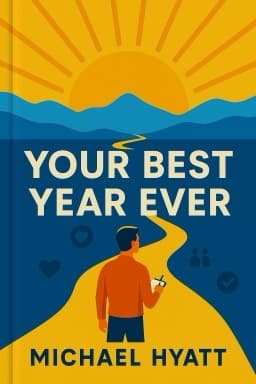
How to Turn Regret Into Rocket Fuel: Completing Your Past for a Brighter Future
Why Looking Back With Compassion Is the Secret to Moving Forward

Why Looking Back With Compassion Is the Secret to Moving Forward
Regret gets a bad rap. We’re told to 'move on,' 'let it go,' or 'never look back.' But in 'Your Best Year Ever,' Michael Hyatt flips the script: regret, he argues, can be your most powerful teacher—if you know how to listen. Studies show that regret is not just a negative emotion; it’s a signpost, highlighting where growth is possible and what truly matters to us. In fact, the areas of life where you feel the deepest regret are often those where you care the most, and where you have the greatest potential for change.
Hyatt introduces the After-Action Review—a four-step process borrowed from elite organizations and adapted for personal growth. First, state your intentions: What were you trying to achieve? Next, acknowledge reality: What actually happened? Then, extract the lessons: What went well? What would you do differently? Finally, adjust your behavior: What will you change next time? This process turns every experience, good or bad, into a stepping stone for the future.
Consider the story of a young professional who lost out on a big promotion. Instead of burying her disappointment, she journaled her intentions, reviewed what happened, and realized she hadn’t communicated her achievements clearly enough. By extracting that lesson, she changed her approach—and landed an even better opportunity a year later. Another example: a father who regretted missing family milestones used the After-Action Review to realign his priorities, scheduling weekly 'family nights' that became cherished traditions.
This approach isn’t about wallowing in the past or beating yourself up. It’s about honest reflection, gentle learning, and compassionate adjustment. When you complete your past, you free yourself from its grip—and open space for something new. As Hyatt writes, 'The point of regret is not to try to change the past, but to shed light on the present.' Use your regrets as rocket fuel, and watch your future take off.
Next up: We’ll show you how to set goals that actually work—using a proven framework that goes far beyond the usual advice.
Want to explore more insights from this book?
Read the full book summary