
Unlocking Your Best Year Ever: The Life-Changing Power of Belief
How Challenging Your Inner Stories Can Redefine Your Future
How Challenging Your Inner Stories Can Redefine Your Future
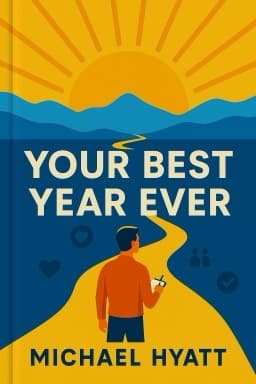
Every year, millions set resolutions with high hopes, only to abandon them weeks later. Why? The answer, Michael Hyatt suggests in 'Your Best Year Ever,' lies not in willpower or circumstance, but in the beliefs we hold about ourselves. The book’s opening message is both simple and profound: our beliefs shape our reality. If you believe you’re not good enough, too old, too inexperienced, or simply unlucky, these thoughts become invisible fences, quietly limiting your actions and ambitions.
Hyatt introduces readers to the concept of 'limiting beliefs'—those quiet, persistent narratives that whisper, 'You can’t,' 'You shouldn’t,' or 'It’s not for you.' These beliefs often masquerade as facts, but they’re just stories, shaped by past experiences, failures, or even the opinions of others. Scientific studies back this up: the phenomenon of the self-fulfilling prophecy shows that what we expect tends to become true, because our actions subconsciously align with those expectations. In fact, research from Stanford University demonstrates that students who believe intelligence can be developed perform better academically than those who see it as fixed. The same principle applies to our goals, careers, and relationships.
But here’s the good news: beliefs can be changed. Hyatt offers a practical, step-by-step process for identifying and challenging these mental barriers. Start by noticing the stories you repeat to yourself—especially when you feel stuck or discouraged. Ask, 'Is this really true? What evidence do I have? What would I tell a friend in my situation?' Then, gently replace limiting beliefs with liberating truths. Instead of, 'I always fail,' try, 'I am learning and growing every day.' Instead of, 'It’s too late,' remind yourself, 'It’s never too late to begin.'
Real-life stories in the book illustrate this transformation. One reader, for example, believed she was too introverted to lead a team. Through reflection and support, she reframed her belief: her listening skills and empathy were strengths, not weaknesses. She stepped up, and her team flourished. Another example: a man who had failed in business twice believed he was 'just unlucky.' By focusing on what he’d learned and how he’d grown, he launched a third venture—this time with confidence and a new mindset—and succeeded.
The process isn’t instant, nor is it easy. But it is possible—and it’s the foundation for every other change you want to make. As you reflect on your own beliefs, remember: every new belief is a key that unlocks a new possibility. Start with one story today, and watch your year—and your life—begin to change.
Ready to go deeper? In the next blog, we’ll explore how to complete your past and turn regret into a powerful tool for growth.
Want to explore more insights from this book?
Read the full book summary