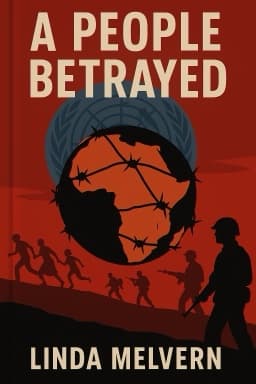
Linda Melvern
An in-depth investigative account revealing the historical causes, execution, and international failures surrounding the 1994 Rwandan genocide.
Linda Melvern gained unprecedented access to classified documents and interviews that revealed new information about the genocide.
Section 1
9 Sections
Imagine a land nestled in the heart of Africa, where social status was measured not by gold or land alone, but by the number of cattle one owned. This was Rwanda, a kingdom where the rhythms of life were intertwined with the herding and care of cattle, the pivot around which society revolved.
Yet, beneath this seemingly stable order, the seeds of division were quietly being sown. The labels Hutu and Tutsi, often misunderstood as rigid ethnic groups, were in fact fluid social categories. They were shaped by wealth, occupation, and lineage rather than immutable racial traits.
When the Germans arrived in 1894, followed by the Belgians after World War I, they imposed a new order. The Belgian administration, in particular, institutionalized ethnicity by issuing identity cards that fixed individuals as Hutu, Tutsi, or Twa. This bureaucratic classification, combined with preferential treatment of the Tutsi minority in education and administration, deepened social fissures.
These policies ignored the fluidity and complexity of Rwandan identities, transforming social distinctions into rigid divisions that would have catastrophic consequences decades later. The colonial legacy left a fractured society, where resentment simmered beneath the surface, waiting for the right moment to erupt.
Understanding this history is essential to grasp why Rwanda became a powder keg. It was not ancient hatreds alone but the manipulation and hardening of identities through colonial rule that set the stage for tragedy. As we move forward, we will explore how these divisions evolved in post-independence Rwanda and how they influenced the political landscape that led to the genocide.
Let us now turn to the turbulent years following independence, where new leaders emerged and old wounds deepened, shaping the destiny of Rwanda.
What was the primary basis of social status in pre-colonial Rwanda?
17 more quizzes available in app
Rwanda's social order was deeply connected to cattle ownership, which influenced political and social power.
8 more insights available in app
Unlock all 9 sections, 9 insights, full audio, and interactive mind map in the SnapBooks app.
How centuries of social dynamics and colonial interference brewed a tragedy decades in the making
Read articleThe political transformations that turned fragile peace into violent exclusion and set the stage for genocide
Read article