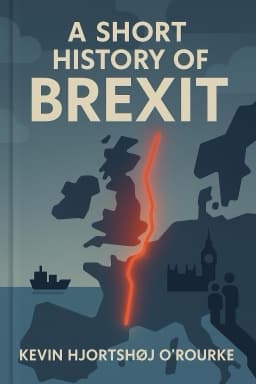
Kevin Hjortshøj O’Rourke
A detailed historical and political analysis of Brexit, focusing on European integration, British exceptionalism, Ireland’s role, and the complex negotiations.
The term 'Brexit' combines 'Britain' and 'exit' and became popular during the 2016 referendum.
2 more facts available in the app
Section 1
7 Sections
Imagine Europe in the aftermath of the Second World War: cities lay in ruins, millions mourned lost loved ones, and economies were shattered. The scars of industrial warfare were deep, with some countries losing nearly a tenth of their population.
One of the most symbolic gestures of this new era was the reconciliation between France and Germany, two nations whose rivalry had fueled multiple devastating wars. By pooling their coal and steel industries under a supranational authority, they sought to bind their destinies together, making war not only unthinkable but materially impossible.
But why supranational? Why not just voluntary cooperation? The answer lies in the need for binding commitments. Nations had to surrender some sovereignty to a higher authority capable of enforcing decisions, ensuring that no country could unilaterally disrupt the fragile peace. This was embodied in institutions like the High Authority and the European Court of Justice, which could make decisions that transcended national interests.
Economic realities also played a crucial role. Europe needed to rebuild, and that meant ensuring food security and economic stability. Agriculture, a vital sector, required protection through guaranteed prices and coordinated policies to prevent market chaos. The Common Agricultural Policy emerged as a necessary compromise, balancing the demands of different nations and preserving rural livelihoods.
These early steps towards integration were not just about economics or politics; they were about healing a continent torn apart by war, creating a framework for lasting peace and prosperity.
As we move forward, we will explore how Britain’s unique history shaped its cautious and sometimes resistant stance towards these developments, setting the stage for the complex relationship that would eventually culminate in Brexit.
What was a key reason for the creation of supranational European institutions after WWII?
13 more quizzes available in app
The immense human and economic costs of the two World Wars created a powerful motivation for European countries to seek peace through integration.
8 more insights available in app
Unlock all 7 sections, 9 insights, full audio, and interactive mind map in the SnapBooks app.
Discover the deep-rooted historical, political, and economic forces that shaped Brexit and continue to influence Europe's future.
Read articleUnpacking Britain’s unique economic and political identity that shaped its hesitant relationship with Europe.
Read article