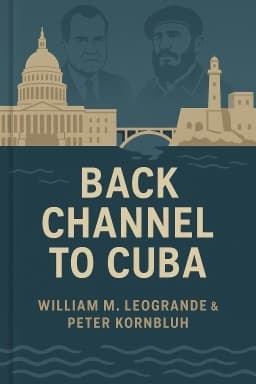
William M. LeoGrande & Peter Kornbluh
A detailed chronicle of secret U.S.-Cuba negotiations revealing the persistent efforts and challenges in seeking rapprochement amid decades of hostility.
James B. Donovan, best known for negotiating the release of U-2 pilot Francis Gary Powers, also played a pivotal role in negotiating the release of Bay of Pigs prisoners from Cuba.
Section 1
8 Sections
In the dawn of 1959, a new chapter in the Caribbean was being written. The youthful, charismatic leader who had just emerged from the Sierra Maestra, clad in olive fatigues and surrounded by his bearded guerrillas, stepped onto the world stage with a mixture of hope and defiance. His visit to the United States was met by cheering crowds — tens of thousands greeted him at New York’s Penn Station and Central Park, reflecting a public fascination with the revolution. Yet, behind this popular enthusiasm, the official corridors of power told a different story. The U.S. President chose to avoid a meeting, retreating to the golf course, an act that spoke volumes about the brewing mistrust.
Ambassador Philip Bonsal, a seasoned diplomat with a belief in patient engagement, sought to build a bridge of understanding. He recognized the intricate economic ties that bound the two nations and hoped that these ties would encourage moderation. Yet, the revolution’s radical undertones and the firing of moderate ministers signaled a shift. The agrarian reform law, which nationalized large estates without immediate cash compensation, was a red line for U.S. investors and policymakers.
The exchanges were delicate dances of words and gestures, where every phrase was weighed for its political impact. Economic interdependence was both a tether and a battleground. The United States feared losing its dominance, while Cuba sought sovereignty and social justice. This tension was embodied in the symbolic joke Fidel made to the U.S. official introduced as 'in charge of Cuban affairs,' reminding everyone that Cuba was no longer a U.S. protectorate.
Yet, despite the rising rhetoric and the first public clashes, there remained a fragile hope. The dialogue was tentative, often carried out in quiet meetings and through intermediaries. But as the months passed, the hardliners gained ground on both sides. The United States began covert operations aimed at destabilizing the Cuban government, while Cuba’s embrace of Soviet support deepened the divide.
This opening chapter of our journey reveals the complexities of post-revolution diplomacy — a tale of missed opportunities, fragile trust, and the heavy shadows of history. As we step forward, we will see how these early interactions set the stage for dramatic confrontations and secret conversations that would define a half-century of relations. Let us now turn to the next phase, where the Kennedy administration grapples with the realities of Cuba’s revolution and the search for accommodation amidst escalating tensions.
What was Ambassador Bonsal’s approach to early U.S.-Cuba relations?
15 more quizzes available in app
Initial attempts at dialogue between the U.S. and Cuba showed promise but were fraught with misunderstanding and mistrust.
8 more insights available in app
Unlock all 8 sections, 9 insights, full audio, and interactive mind map in the SnapBooks app.
Discover the hidden conversations and secret negotiations that shaped decades of U.S.-Cuba relations beyond public headlines.
Read articleA deep dive into the secret negotiations that kept U.S.-Cuba relations from total collapse and paved the way for future peace.
Read article