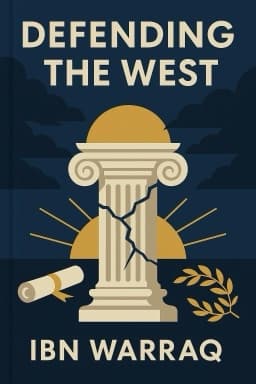
Ibn Warraq
A rigorous defense of Western civilization and a detailed critique of Edward Said's Orientalism, emphasizing rationalism, universalism, and self-criticism as core Western values.
Ibn Warraq is a pen name, chosen to mean 'son of a papermaker', symbolizing a commitment to scholarship.
Section 1
7 Sections
In the vast tapestry of intellectual history, certain threads have been woven so tightly that they obscure the true picture. One such thread is the widely influential work known as Orientalism, which, despite its acclaim, is riddled with contradictions and selective scholarship.
Furthermore, the narrative selectively omits key figures who do not conform to its ideological framework. German Orientalists, pioneers in the field whose meticulous scholarship laid the groundwork for modern studies, are conspicuously absent. This omission is not accidental but a deliberate act to maintain a skewed perspective that paints Western scholarship uniformly as imperialistic and complicit in domination. Yet, history is rarely so monochrome.
Consider the implications of these intellectual shortcomings. When a discourse denies the very possibility of truth, it undermines the pursuit of knowledge itself. When scholarship is selective, it becomes propaganda rather than inquiry. Such distortions do not merely affect academic debates; they ripple through cultural understanding and political discourse, shaping perceptions and policies.
This realization invites us to question received wisdom and to seek a more balanced, nuanced understanding. It beckons us to untangle the threads of ideology from those of genuine scholarship, to appreciate the complexity of history and the diversity of voices within it.
As we move forward, we must explore the deeper values that underpin Western civilization, the very ones that have fostered the quest for knowledge and self-reflection.
What is one major intellectual flaw of Orientalism as discussed?
13 more quizzes available in app
Orientalism asserts knowledge but denies objective truth, creating a paradox.
7 more insights available in app
Unlock all 7 sections, 8 insights, full audio, and interactive mind map in the SnapBooks app.
A deep dive into the intellectual paradoxes and selective scholarship that challenge the foundations of Orientalism.
Read articleExploring rationalism, universalism, and self-criticism as the pillars of Western progress and their relevance in a globalized world.
Read article