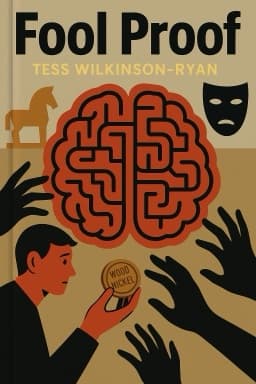
Tess Wilkinson-Ryan
An insightful analysis of the fear of being duped and its profound effects on individual behavior, social dynamics, and systemic inequalities.
The term 'sugrophobia' was coined in 2007 by psychologists to describe the fear of being duped.
Section 1
8 Sections
Imagine the subtle, yet powerful, fear that grips us whenever we consider trusting another person. This fear, known in psychological circles as sugrophobia, is the dread of being played for a fool. It’s a feeling so deep that it shapes not only individual choices but also the fabric of society itself.
Consider the simple phrase, “Don’t take any wooden nickels!”—a parental admonition that carries a weight far beyond its quaint wording. It encapsulates a universal warning: beware of deception. This warning is not merely about money but about self-preservation of dignity and social standing.
Experiments in social psychology reveal how this fear manifests. In one scenario, people receive a phone call from a stranger claiming to be stranded and in need of help. Though the ask is small and the cost minimal, many refuse, not because they lack empathy, but because the fear of being tricked overrides the impulse to assist. In another, a table offers 'Free Money!'—a dollar bill to anyone who approaches. Yet over 90% of people walk by, suspicious of the too-good-to-be-true offer.
At the heart of this fear lies regret—an emotional replay of self-blame and humiliation. When we are fooled, our minds play a relentless 'cringe reel' of moments where we could have acted differently. Unlike a random robbery where we are passive victims, being duped involves cooperation, making the pain of regret sharper and more enduring.
Yet regret can be merciless, sometimes leading us to overlearn lessons and retreat from valuable risks. This is the paradox of sugrophobia: it protects us but can also imprison us in fear. It colors our willingness to trust, to share, and to engage with others.
As we journey deeper into this exploration, we will see how this fear is not merely an individual quirk but a social force, weaponized in politics and culture to maintain hierarchies and control. But before we confront these broader implications, it’s essential to grasp the intimate, psychological roots of the fear itself.
Let us now move from the inner workings of fear to its outward expression: how the fear of being played becomes a weapon in the hands of those who understand its power.
What is sugrophobia?
15 more quizzes available in app
A unique psychological phenomenon that governs much of human caution in social and economic interactions.
8 more insights available in app
Unlock all 8 sections, 9 insights, full audio, and interactive mind map in the SnapBooks app.
Unpacking the deep-rooted fear that shapes our social lives and how to overcome it
Read articleThe dark side of sucker fears in modern political tactics
Read article