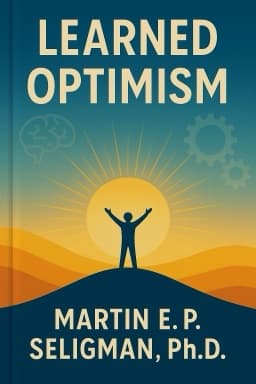
Imagine the first light of dawn, gentle and promising, washing over a quiet landscape. This is the feeling that the science of optimism brings to the world of psychology—a field that, for so long, was shrouded in the shadows of suffering, focused only on what makes us unwell. In this opening chapter of our journey, let’s pause and breathe in the realization that the way we think is not just a reaction to life, but a force that shapes it. For decades, psychology was a discipline of mending wounds, of patching up what was broken. But what if, instead, we could learn to cultivate the conditions for happiness, resilience, and flourishing? This is the question that sparked the birth of positive psychology—a movement that looks at what’s right with us, not just what’s wrong.
One of the great revelations of this new science is the concept of explanatory style. Each of us carries within a silent narrator, a voice that tells us why things happen. Some of us, when faced with setbacks, see them as fleeting and specific—just a cloud passing by. Others see them as permanent storms, coloring the whole sky. This difference, it turns out, is not trivial; it is the difference between hope and despair, between giving up and trying again.
Imagine two people, both facing a tough week at work. One thinks, “This is just a rough patch, it will pass.” The other sighs, “Nothing ever goes right for me, I must be a failure.” The first is likely to bounce back, to try again with renewed energy. The second may spiral into helplessness.
But here’s the beauty: optimism is not simply a gift for the lucky few. It can be measured, learned, and practiced. In the pages ahead, you’ll discover stories of transformation, of people who rewrote their inner scripts and changed the course of their lives. Optimism, as the research shows, is not just about feeling good—it's about living longer, healthier, and more fulfilling lives.
So as we begin this journey, let us remember: the mind is not a passive observer, but a painter of possibility. With each thought, we choose the colors of our days. Let’s step forward, together, into the next section, where we’ll explore the roots of helplessness—and how we can learn to break free.