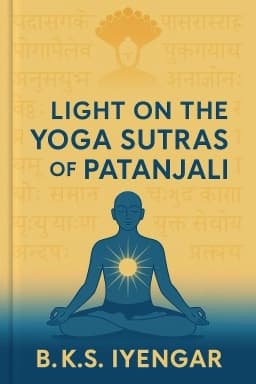
Let us begin our journey with a gentle breath, stepping softly into the mists of ancient India. Imagine a sage, seated quietly as dawn breaks over a marble courtyard, his presence radiating calm. This is Patanjali, whose tale is woven from both history and myth. Some say he descended from the heavens, a tiny serpent landing in the cupped hands of his mother, Gonika, as she prayed for a worthy son. Others know him as a scholar who shaped not only yoga, but also the Sanskrit language and the science of Ayurveda. His wisdom was not bound to a single discipline; it was a thread that stitched together body, mind, and spirit.
In a world where knowledge was often spoken, not written, Patanjali’s choice to compose his teachings as brief, potent sutras was revolutionary. Each aphorism, no longer than a whisper, carries the weight of centuries. There are just 196 sutras, yet they have inspired thousands of commentaries and millions of practitioners. Their brevity is their brilliance: like seeds, they contain forests of meaning, waiting to be nurtured by contemplation.
Picture the sage surrounded by students, their eyes bright with curiosity. He speaks not only of yoga, but also of the power of words and the healing of bodies. His approach is holistic—he knows that to truly thrive, a person must cultivate clarity in speech, health in body, and peace in mind. Language, medicine, and yoga are not separate; they are facets of the same jewel.
This unity is echoed in the mythic story of his birth. The serpent, Adisesa, is a symbol of latent energy and wisdom. By taking human form, Patanjali becomes the bridge between the divine and the earthly, between the abstract and the practical. His teachings are the ladder by which we may climb from confusion to clarity.
As we set out on this path, let us remember: yoga is not just a set of postures or techniques. It is a living tradition, a conversation between the ancient and the modern, the seen and the unseen. To study the Yoga Sutras is to invite the timeless into our daily lives.
With this foundation, let us step forward, ready to explore the philosophical roots and the luminous promise of yoga in our next section.