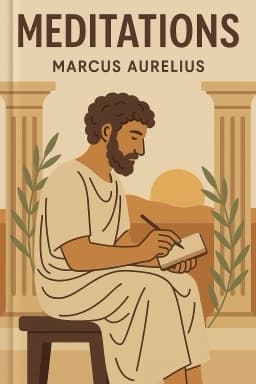
Marcus Aurelius
A timeless guide to Stoic wisdom and self-mastery from a Roman emperor.
Marcus Aurelius wrote Meditations as private notes, never intending them for publication.
Section 1
6 Sections
Let us begin our journey into the Meditations with a gentle breath, a moment of quiet, and the assurance that the best wisdom does not shout, but whispers. Imagine an emperor, ruler of the known world, sitting not on a throne, but at a simple desk, pen in hand, reflecting on how to be a good person.
Virtue, for Marcus, is not a distant ideal. It is the daily practice of wisdom, justice, courage, and temperance. These aren’t abstract terms—they’re living, breathing choices. Wisdom is listening before speaking, seeking understanding before judgment. Justice is treating others fairly, even when it is inconvenient. Courage is facing pain or loss with steady eyes. Temperance is savoring life’s pleasures without being ruled by them.
He writes, too, of the value of reflecting each morning: today, I may meet someone unkind, ungrateful, or selfish. But they are my kin in reason, and I will respond with patience and integrity. This is not naive optimism, but a practical shield against disappointment and anger. In these pages, we see the emperor’s vulnerability—his doubts, his struggles, his longing to be better than yesterday.
As we close this first section, let us carry forward the gentle power of virtue, knowing it is both a shield and a light. Next, we’ll explore how reason and self-discipline transform these ideals into daily reality, guiding us through the storms of emotion and adversity.
7 more insights available in app
Unlock all 6 sections, 8 insights, full audio, and interactive mind map in the SnapBooks app.
Discover the timeless advice from Rome’s philosopher-king that still transforms lives today.
Read articleHow an ancient emperor’s diary became the blueprint for thriving in a high-pressure world.
Read article