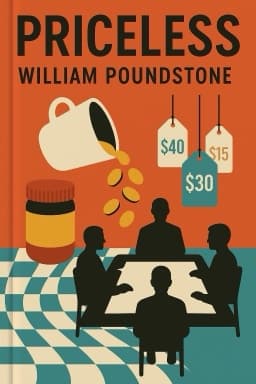
William Poundstone
An insightful exploration of how psychology shapes pricing, value perception, and economic decision-making beyond traditional rational models.
The infamous McDonald's coffee lawsuit was influenced by anchoring effects in the jury's award.
Section 1
9 Sections
Imagine a world where the numbers that govern our daily transactions are not as fixed and objective as we believe.
But this is just one example of a broader phenomenon. In supermarkets across the world, products quietly shrink in size while prices stay the same. A jar of peanut butter may lose ounces, a cereal box becomes thinner, yet the price tag remains unaltered.
These examples illustrate how pricing is a dance of perception, not just economics. Our brains latch onto anchors — initial numbers or familiar price points — and adjust insufficiently when faced with new information. This anchoring effect influences everything from legal awards to everyday shopping decisions.
Understanding this invisible power helps us see beyond the surface of numbers and empowers us to make wiser choices. As we move forward, we'll explore the science of perception itself, revealing how our senses and minds shape the value we assign to the world around us.
Let us now delve deeper into the fascinating interplay between perception and reality, where the senses deceive and the mind constructs value.
What psychological effect caused the jury to award a large sum in the coffee lawsuit?
17 more quizzes available in app
Initial numbers strongly influence how people perceive value and make decisions about prices.
8 more insights available in app
Unlock all 9 sections, 9 insights, full audio, and interactive mind map in the SnapBooks app.
Uncover the invisible forces that shape how you perceive prices and why you often pay more without realizing it.
Read articleDiscover the invisible anchors that bias your spending habits and how to break free.
Read article
Ian Ayres

Dan Ariely
Dan Ariely
Richard H. Thaler and Cass R. Sunstein
