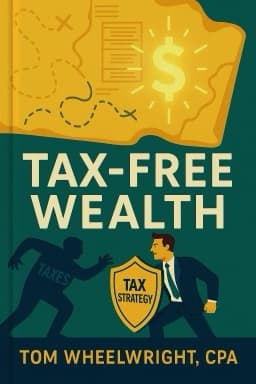
Tom Wheelwright, CPA
A practical guide to permanently reducing taxes and building wealth by leveraging tax laws and strategic planning.
Over 99.5% of the U.S. tax code is designed to reduce taxes, not raise them.
Section 1
10 Sections
Imagine waking up one day to realize that a silent thief has been robbing you—not of your possessions, but of your precious time and hard-earned money. This thief is taxes, a force so pervasive that it quietly consumes nearly a third of your working life.
Inflation, often unnoticed, acts like an accomplice to this thief. As prices rise, your income may increase nominally, but this pushes you into higher tax brackets, causing you to pay a larger percentage in taxes.
But there is a silver lining in this story. The tax code is not merely a tool for extraction; it is also a map—a treasure map.
Understanding this flips the narrative. Instead of viewing taxes as an unavoidable burden, you can see them as a guide to where the government wants you to put your resources. By aligning your activities with these incentives, you can reduce your tax burden and build wealth simultaneously.
For example, consider how investing in real estate or energy projects can unlock deductions and credits that reduce your taxable income. This means you not only keep more of your money but also contribute to economic growth, fulfilling the government's goals.
As we embark on this journey, remember that changing your facts—your financial activities and how you document them—can change your taxes.
In the next section, we will explore the two fundamental rules of tax law that will transform your understanding and approach to taxes, empowering you to take control and make the tax code work for you.
What percentage of a person's working life is typically spent paying taxes?
19 more quizzes available in app
Taxes do more than take your money; they take your valuable time by forcing you to work longer.
9 more insights available in app
Unlock all 10 sections, 10 insights, full audio, and interactive mind map in the SnapBooks app.
Discover the hidden truths behind tax laws and how smart entrepreneurs and investors keep more of their money.
Read articleStop giving away your hard-earned money and learn how to keep more with proven tax-saving hacks.
Read article
Dave Ramsey

Chris Hogan

Vivian Tu
Thomas J. Stanley, Ph.D. and William D. Danko, Ph.D.
