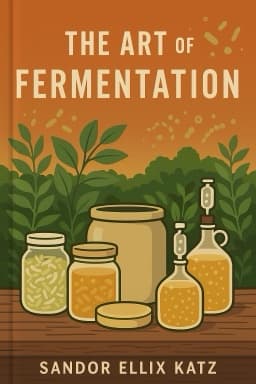
Sandor Ellix Katz
A definitive guide to the science, techniques, and cultural significance of fermentation for food, health, and sustainability.
Fermentation is one of the oldest forms of food preservation, predating recorded history.
Section 1
7 Sections
Imagine a world unseen by the naked eye, a vast and vibrant ecosystem thriving within and around us. This is the realm of microbes — bacteria and fungi — that have been our silent companions since the dawn of life.
Long before humans walked the earth, fermenting bacteria transformed the primordial soup, crafting the chemical systems essential to life. Through a process called symbiogenesis, these microbes merged with early single-celled organisms, giving rise to the complex cells that form plants, animals, and fungi.
Our bodies are ecosystems unto themselves. The intestines alone harbor approximately 100 trillion bacteria, working tirelessly to digest nutrients we otherwise could not access, synthesizing vital vitamins, and defending us against pathogens. Even the skin, mouth, and reproductive tracts host unique microbial communities adapted to their specific environments. Each niche is as distinct as a rainforest compared to a desert, showcasing the incredible diversity of life within us.
Yet, the story of microbes is not static. Bacteria possess a remarkable genetic fluidity, freely exchanging genes through mechanisms that resemble a bustling marketplace of information. This genetic dynamism accelerates their adaptation, allowing them to respond swiftly to environmental changes and influences from their hosts.
Consider the discovery that some marine bacteria have enzymes capable of digesting seaweed polysaccharides, genes that were later found in the gut bacteria of Japanese populations but not in North Americans. This fascinating example illustrates how the microbes on the food we consume can influence our metabolic capabilities, highlighting the deep interconnectedness between diet, environment, and microbial genetics.
However, modern life has distanced us from this microbial world. The widespread use of antibiotics, antibacterial soaps, and sanitized environments has led to a 'War on Bacteria' that, while well-intentioned, threatens the delicate balance of our internal ecosystems. The disappearance of certain bacteria once thought harmful, such as Helicobacter pylori, correlates with rising incidences of obesity, asthma, and other health issues, reminding us that microbial diversity is key to our well-being.
Embracing this microbial partnership requires cultivating a biophilic consciousness — a deep appreciation and connection to the living world within and around us. Fermentation, the ancient art of transforming food through microbial action, offers a tangible way to engage with this hidden community. It invites us to participate in a process millions of years in the making, fostering health, culture, and ecological harmony.
As we begin this journey into the art and science of fermentation, remember that the microbes you cultivate are not just agents of transformation for your food but partners in a larger story of life.
Let us now move from understanding the invisible world of microbes to exploring the practical benefits that fermentation brings to our lives — preservation, health, energy efficiency, and flavor — the very reasons this ancient process endures.
What is the approximate ratio of bacterial cells to human cells in the human body?
13 more quizzes available in app
Humans and microbes have evolved together in a mutually dependent relationship.
8 more insights available in app
Unlock all 7 sections, 9 insights, full audio, and interactive mind map in the SnapBooks app.
Discover the Invisible Allies Inside You and How Fermentation Connects Us to Life Itself
Read articleMaster the Ancient Art That Boosts Nutrition and Creates Irresistible Flavors
Read article