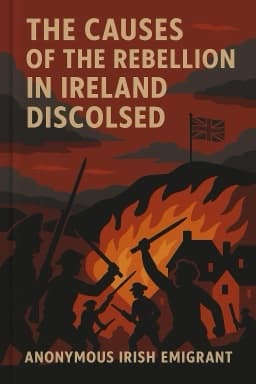
Anonymous Irish Emigrant
A detailed exposé on the political and social causes behind the Irish Rebellion, highlighting oppression, sectarian violence, and the call for reform.
The 1798 Irish Rebellion was inspired in part by the American and French Revolutions.
Section 1
7 Sections
As we begin this journey into the heart of Ireland’s struggle for freedom, imagine a nation awakening to the possibility of self-rule. In 1782, Ireland was granted nominal legislative independence, a moment filled with hope and expectation. Yet beneath this hopeful veneer lay a deep uncertainty, a question that would haunt the Irish people for years: was this independence real or merely a temporary reprieve?
The legal debates of the time were intense and passionate. Leading figures such as Walter Hussey Burgh and Henry Flood emerged as voices of reason and skepticism. They argued that the repeal of British parliamentary claims was not a complete renunciation but a suspended right, one that could be reclaimed when circumstances favored the British Crown. This nuanced position was not mere legal hair-splitting; it reflected a profound mistrust born from decades of domination and broken promises.
Public sentiment was deeply influenced by these debates. The people of Ireland, though proud of their nominal freedom, remained wary of the British government’s intentions. They were caught between a newly found pride and a lingering fear that their autonomy could be revoked at any moment. This duality created an atmosphere charged with both hope and suspicion, energizing political activism but also sowing discord.
Amidst this backdrop, armed citizens known as the Volunteers took center stage. They embodied the spirit of a people ready to defend their rights, not just with words but with arms. Their presence symbolized a new kind of political engagement, one that combined loyalty with a fierce demand for reform.
As the story unfolds, we see how this awakening was both a triumph and a challenge. The Irish people had tasted freedom, yet the shadow of British influence loomed large. The struggle for true independence was just beginning, setting the stage for the conflicts and reforms that would follow.
With this understanding of Ireland’s tentative legislative independence, we now turn to the efforts of the Volunteer Convention and the fight for parliamentary reform, where the aspirations of the people would meet the resistance of entrenched power.
What significant event occurred in Ireland in 1782?
13 more quizzes available in app
Ireland’s 1782 legislative independence was more symbolic than absolute, leading to political ambiguity.
6 more insights available in app
Unlock all 7 sections, 7 insights, full audio, and interactive mind map in the SnapBooks app.
Unveiling the untold story of Ireland’s fight for autonomy and the birth of a political awakening
Read articleThe surprising story of a militia that became a political powerhouse
Read article