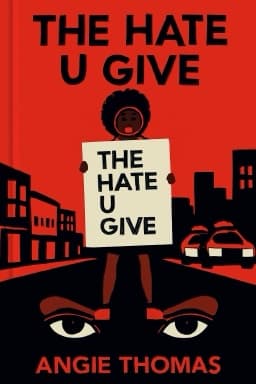
Imagine standing at the crossroads of two worlds, each tugging at your heart in different ways. That’s the journey we begin with, as we walk in the shoes of a young girl named Starr. Her life is a dance between the vibrant, sometimes chaotic streets of her home neighborhood and the polished, orderly halls of her private school. Each day, she must decide which mask to wear, which words to choose, and which parts of herself to reveal.
In her neighborhood, Starr is surrounded by the familiar—family, childhood friends, laughter echoing down the block. There’s a sense of belonging, of shared struggle and joy. But as soon as she steps into her school uniform, a subtle transformation occurs. She becomes quieter, more careful, watching her words so as not to be labeled as ‘too much’ or ‘too different.’
This experience, known as code-switching, isn’t just about language. It’s about survival. It’s about fitting in, even when it means leaving pieces of yourself behind. For Starr, this means hiding her love for sneakers, her slang, even her grief. She’s not alone—so many young people walk this tightrope every day, feeling as if they are never fully at home in any one place.
Yet, as we follow her journey, we see that this struggle is also a source of strength. Her family grounds her, offering wisdom and love that bridge the gap between worlds. Her friendships, though sometimes fraught with misunderstanding, push her to grow and question who she really wants to be.
Through the lens of Starr’s life, we learn that identity isn’t fixed—it’s a living, breathing thing, shaped by our experiences, our choices, and the communities that claim us. True belonging comes not from hiding, but from embracing every part of who we are.
And as we move forward, we’ll see how these two worlds collide in ways that force Starr—and us—to confront what it truly means to belong. Let’s step into the next chapter, where a single event will shake both worlds to their core.