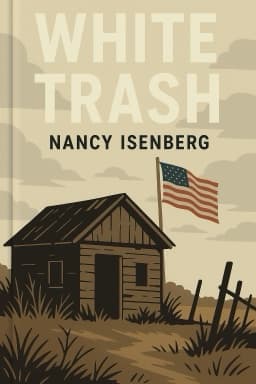
Nancy Isenberg
A comprehensive history revealing the deep-rooted class divisions and the marginalized white rural poor in America from colonial times to the present.
The term 'white trash' has origins dating back to the 1500s English colonial era.
2 more facts available in the app
Section 1
8 Sections
As we embark on our journey through the hidden history of class in America, we begin in the murky, often grim origins of the colonial era.
Indentured servitude became the backbone of this system. Young men and women, often orphans or debtors, sold years of their lives in exchange for passage to an uncertain future.
Life in early settlements was harsh and unforgiving. Many succumbed to disease, starvation, and brutal working conditions.
Yet, amid this bleakness, the seeds of America's class system took root. Land was the ultimate prize, the measure of freedom and status. Those who owned land were masters; those who labored without land were bound to servitude and poverty.
From these early days, a pattern emerged: a small elite monopolized land and power, while a vast underclass of poor laborers remained marginalized and exploited. This foundation of class and inequality would echo through centuries of American history.
As we reflect on these origins, we see the complex interplay of land, labor, and human worth that shaped the young colonies.
Let us now turn to how these ideas evolved in the Enlightenment and Revolutionary periods, where thinkers grappled with liberty, labor, and the promise of a new society. Their visions would shape, and sometimes obscure, the realities of class in America.
What was the English colonial view of poor and idle people sent to America?
15 more quizzes available in app
The English mindset equated poor people and uncultivated land as waste needing management and exploitation.
8 more insights available in app
Unlock all 8 sections, 9 insights, full audio, and interactive mind map in the SnapBooks app.
Discover the deep roots of class in America, from colonial times to today, and why understanding 'white trash' changes everything.
Read articleA deep dive into how class origins influenced American political structures and continue to shape today's landscape.
Read article