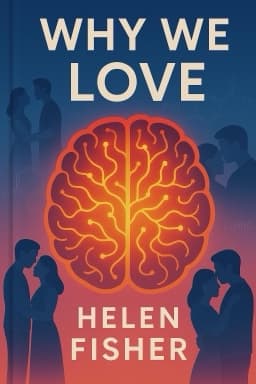
Helen Fisher
A scientific deep dive into the brain chemistry and evolutionary roots of romantic love.
Helen Fisher’s research inspired the matchmaking algorithms used by dating sites like Match.com.
Section 1
6 Sections
Imagine for a moment that love is not just a fleeting feeling, but a symphony played by the hidden architecture of your brain.
Let’s begin with lust, the primal drive powered by testosterone. It’s the surge that makes you notice someone across a crowded room, the energy that fuels flirtation and fantasy. Lust is not picky; it’s a broad searchlight, encouraging us to seek out partners and ensure the continuation of our species. Yet, lust alone cannot explain the dizzying focus we sometimes feel for just one person.
This is where attraction steps in, powered by dopamine and norepinephrine.
But what about the quiet comfort of a long embrace, the sense of safety you feel with a trusted partner? This is attachment, fueled by oxytocin and vasopressin. Attachment is the glue that holds couples together through years of change, the reason we crave not just excitement but also stability.
All three systems—lust, attraction, and attachment—can intertwine or operate separately.
As we journey through these sections, remember that your experiences are echoed in the lives of billions. The next time you feel swept away by love, know that your brain is following a script written over millennia. And as we move forward, we’ll explore how evolution shaped these systems into the complex dance of human relationships.
7 more insights available in app
Unlock all 6 sections, 8 insights, full audio, and interactive mind map in the SnapBooks app.
How Evolution and Chemistry Orchestrate Every Heartbeat
Read articleWhy Lost Love Hurts Like Withdrawal—And How Your Brain Can Heal
Read article
Shane O'Mara
Daniel J. Levitin
Michael Pollan
Richard Dawkins
