
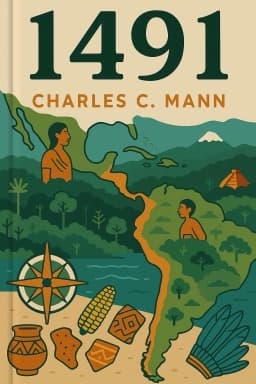
Inside the Lost Empires of the Americas: Secrets of Ancient Cities and Powerful Kingdoms
Exploring the political and social complexity of indigenous empires before European contact

Exploring the political and social complexity of indigenous empires before European contact
The Americas were not a patchwork of isolated tribes but a continent woven with powerful empires, city-states, and confederations. Tiwanaku, perched near Lake Titicaca, was a sprawling polity with an estimated population rivaling European cities, featuring advanced irrigation, monumental stone architecture, and extensive trade networks.
Far to the north, Cahokia rose as the largest urban center north of Mexico, with massive earthen mounds, religious temples, and a social hierarchy that organized tens of thousands of inhabitants. Its scale and complexity challenge assumptions about indigenous urbanism.
The Maya civilization was a constellation of city-states engaged in diplomacy, alliance-building, and warfare. Their rulers wielded power through religion, military strength, and trade, supported by elaborate calendars and monumental inscriptions.
By understanding these empires, we gain a richer, more nuanced view of pre-Columbian America, appreciating the political ingenuity and cultural achievements that shaped the continent.
Want to explore more insights from this book?
Read the full book summary