
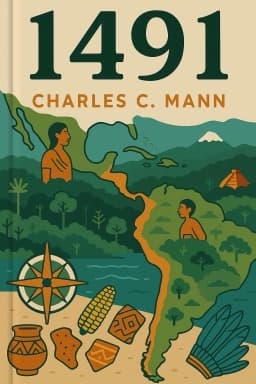
The Shocking Truth About the Americas Before Columbus: What You Never Knew!
Unveiling the vibrant and complex world of the Americas before European contact

Unveiling the vibrant and complex world of the Americas before European contact
For centuries, the story taught in schools and popular culture has portrayed the Americas as an empty wilderness, awaiting discovery by European explorers. This narrative, however, is not only incomplete but fundamentally flawed. Recent archaeological, anthropological, and ecological research has revealed a continent teeming with life, culture, and human ingenuity long before 1492.
Imagine soaring over the vast savannas of Bolivia’s Beni region, where thousands of circular forest islands rise like emerald jewels from the grasslands. These are not natural formations but the remnants of ancient human settlements, carefully engineered to survive seasonal floods. Connected by raised causeways stretching miles across the landscape, these islands reveal a sophisticated society that managed its environment with precision and care.
Farther north, the great mound-building cultures of the Mississippi Valley constructed massive earthen pyramids and urban centers like Cahokia, which housed tens of thousands of people and rivaled contemporary European cities. In the Andes, the Tiwanaku civilization thrived with advanced irrigation systems and monumental stone architecture, demonstrating high-altitude urban sophistication.
These examples are just the tip of the iceberg. Indigenous peoples across the hemisphere domesticated crops such as maize, beans, squash, and potatoes independently, forming the backbone of their economies and nutrition. The Maya developed the concept of zero centuries before it appeared in Europe, enabling complex calendars and astronomical observations. Despite inventing the wheel, its use was mostly limited to toys, reflecting unique technological trajectories shaped by environment and culture.
Population estimates have been dramatically revised upward, with some scholars suggesting that as many as 50 million people lived in the Americas before European contact. This challenges the myth of an empty continent and highlights the profound demographic loss caused by diseases like smallpox, which decimated up to 90% of indigenous populations, often spreading ahead of European settlers through trade networks.
Early encounters between Native Americans and Europeans were marked by strategic alliances and cultural mediation rather than simple conquest. Leaders like Massasoit forged political partnerships to navigate new threats, while figures such as Tisquantum (Squanto) bridged linguistic and cultural divides to aid survival.
Indigenous peoples were not passive occupants but active stewards of their environments. The creation of 'terra preta' soils in the Amazon, the construction of fish weirs and raised fields, and the use of controlled burns illustrate sophisticated ecological knowledge that sustained biodiversity and productivity.
This new understanding compels us to rewrite history with greater respect for Native American agency and legacy. Their cultures, languages, and knowledge systems endure, offering valuable lessons in resilience and sustainability.
As we continue to uncover the truths of the pre-Columbian Americas, we are reminded that history is not static but a living narrative enriched by new discoveries and perspectives.
Want to explore more insights from this book?
Read the full book summary