
Unlocking the Secret Life of Your Hours: Why You Have More Time Than You Think
How to Reclaim Your Week and Live Life on Your Own Terms

How to Reclaim Your Week and Live Life on Your Own Terms
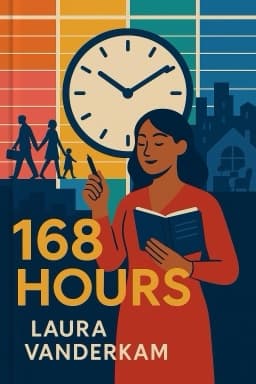
Imagine a world where time flows not as a relentless river, but as a gentle tide, offering you 168 fresh hours every single week. Laura Vanderkam’s '168 Hours: You Have More Time Than You Think' invites us to step back from the chaos and see our lives through this weekly lens—a shift that reveals a world of possibility hiding in plain sight.
Most of us believe we’re hopelessly busy, our days packed to the brim with work, family, and endless to-dos. But Vanderkam’s research—bolstered by hundreds of time diaries—shows that the story we tell ourselves about busyness is often just that: a story. When people track their time in 15-minute increments for a week, they usually find surprising pockets of freedom. For example, someone who swears they work 70 hours a week may discover it’s closer to 50, with the rest lost to emails, meetings, or simply forgetting to count the downtime between tasks.
One of the most powerful tools Vanderkam suggests is the time log. By writing down what you do, hour by hour, you gain a clear-eyed view of where your hours go. This isn’t about judgment—it’s about awareness. Patterns emerge: the TV time you forgot to count, the commute that could become an audiobook session, or the lunch break that could be a walk. It’s liberating, not limiting, to see the truth of your days.
But the book goes further: it asks what you truly want to do with your time. Vanderkam introduces the concept of 'core competencies'—the handful of things you do best and love most. Maybe you’re a creative problem-solver, a nurturing parent, or a visionary at work. By focusing your energy on these strengths, you multiply your impact and satisfaction. The 'List of 100 Dreams' exercise helps clarify what matters: write down 100 things you want to do, see, or learn in your lifetime. Patterns will emerge, guiding you toward your deepest values and goals.
When it comes to work, the book challenges us to seek roles that align with our strengths and values. The right job isn’t just about salary or prestige—it’s about energy, autonomy, and growth. Happy workers are more creative, persistent, and successful. If your current job doesn’t fit, you can shape it by advocating for projects you love or shifting responsibilities, even in small ways.
At home, Vanderkam shows that quality matters more than quantity. Outsourcing chores, sharing responsibilities, and being fully present during family time can transform your home into a sanctuary of joy and connection. Self-care isn’t selfish; it’s essential. Even a few minutes of reading, exercise, or quiet reflection can recharge your spirit.
Finally, the book emphasizes the power of reflection and small, consistent changes. Each week is a new chance to make choices that align with your dreams. You don’t have to overhaul your life overnight—just start by tracking your time, celebrating small wins, and forgiving yourself for the days that don’t go as planned.
In the end, '168 Hours' is a call to live with intention. The way you spend your week is the way you live your life. By seeing your hours clearly and choosing them wisely, you can create a life that’s rich, joyful, and uniquely yours.
Want to explore more insights from this book?
Read the full book summary