Laura Vanderkam
A practical and inspiring guide to reclaiming your time and focusing on what matters most.
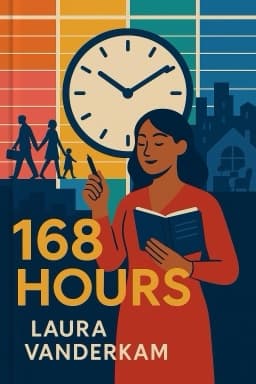
The title '168 Hours' refers to the total number of hours in a week.
Section 1
7 Sections
Let’s begin our journey with a gentle invitation to pause and breathe, to step away from the relentless drumbeat of busyness that so often fills our days. Imagine, for a moment, that time is not your enemy, but a quiet river flowing steadily, offering you the same generous gift each week: 168 hours.
Much of this sensation, as you’ll soon discover, is a story we tell ourselves, shaped by culture, habit, and a lack of awareness. Our first insight is the transformative power of the 168-hour framework. When you stop thinking in frantic daily increments and instead look at the broad, rolling landscape of a week, you begin to see patterns—a mosaic of work, rest, and play—each tile waiting for your conscious touch. This perspective shift is liberating.
But there’s more. Studies show we routinely overestimate how much we work. When people are asked to recall their workweek, they often claim 60, 70, even 80 hours. Yet, when researchers ask them to log their time in real detail, those numbers shrink—sometimes by 20 hours or more. Why? Because our memories are colored by stress, by the moments when we feel overwhelmed. We forget the lulls, the transitions, the time spent chatting, waiting, or drifting. We inflate the narrative of busyness because it feels important, even heroic.
On the flip side, we underestimate our leisure. Americans, for example, report feeling starved for time, yet the average adult manages to watch 18–30 hours of television each week. These hours slip by, unclaimed and unacknowledged, because we don’t see them as real leisure. They’re the background hum of our lives, the default activity when we’re too tired or uninspired to choose something else.
Imagine a woman who claims she has no time for herself, yet, when she tracks her week, she discovers hours lost to scrolling, channel surfing, or waiting. Or a father who believes he’s always at work, but finds that his days are punctuated by coffee breaks, commutes, and moments of quiet between meetings. The truth is, our time is often more flexible than we think.
So, as you listen, let this knowledge settle into your bones: you have more time than you think. The journey ahead will reveal how to see, claim, and cherish those hours. Next, we’ll explore how to turn this new awareness into action by discovering what truly matters most to you.
How many hours are there in a week?
13 more quizzes available in app
Reframing time as a weekly resource.
7 more insights available in app
Unlock all 7 sections, 8 insights, full audio, and interactive mind map in the SnapBooks app.