
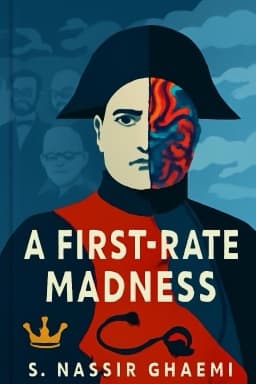
Why Mental Illness Might Be the Secret Ingredient of Great Leadership
Unveiling the surprising link between mental health struggles and extraordinary leadership success.

In a world where leadership is often equated with strength, stability, and unwavering confidence, a surprising truth emerges from the shadows: some of history’s greatest leaders were marked not by perfect mental health but by profound mental struggles.
The concept, known as the 'inverse law of sanity,' suggests that mentally healthy individuals tend to excel in stable, peaceful times, while those with mental illness—particularly mood disorders like bipolar disorder—often shine brightest amid turmoil. This idea flips the stigma on its head, proposing that what we consider weaknesses may actually be hidden strengths.
Consider the manic phases of bipolar disorder, characterized by high energy, rapid thinking, and boundless creativity. These traits can fuel innovative strategies and bold decisions that conventional leaders might shy away from. For example, a renowned 19th-century military general, known for his relentless campaigns, reportedly experienced manic episodes that inspired his audacious tactics, reshaping warfare and history itself.
On the flip side, depression brings with it a sobering clarity known as depressive realism. Depressed individuals often perceive reality with greater accuracy, avoiding the illusions of control that can mislead others. This realism equips leaders to assess risks soberly and make prudent decisions when stakes are highest.
Beyond cognition, depression deepens empathy. Neuroscience reveals that mirror neurons and hormonal mechanisms like oxytocin amplify emotional resonance, allowing leaders to connect profoundly with their followers' suffering and hopes. History’s most transformative leaders harnessed this empathy to inspire peace, justice, and collective healing.
Yet, the journey is not without challenges. Treatments for mental illness, especially in historical contexts, were often ineffective or even harmful, complicating leadership roles. Stigma forces many leaders to conceal their struggles, perpetuating misunderstanding and delaying acceptance of mental health as an integral part of leadership.
Ultimately, resilience emerges as a defining feature. Like a mental vaccine, controlled exposure to adversity builds strength, enabling leaders to endure hardship with humor and determination. Their hyperthymic personalities—marked by optimism and energy—support sustained effort despite chronic challenges.
This nuanced portrait of leadership urges us to reconsider our biases and embrace the complex humanity behind greatness. The best crisis leaders are often those who walk the fine line between madness and genius, whose vulnerabilities fuel their extraordinary capacities.
As we reflect on these insights, we open the door to a richer, more compassionate understanding of leadership—one that honors the strengths born of struggle and the resilience forged in adversity.
Sources: Washington Post Review, BP Hope Review, Shortform Summary, Goodreads
Want to explore more insights from this book?
Read the full book summary