
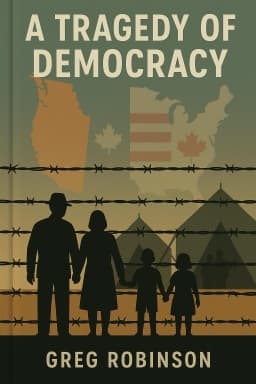
Beyond Pearl Harbor: The Hidden History of Japanese Confinement Across North America
Explore the overlooked continental story of Japanese confinement during WWII, spanning the U.S., Canada, and Latin America.

While the mass removal and confinement of Japanese Americans during World War II is well-documented, fewer are aware that similar policies were enacted in Canada and Latin America. Approximately 22,000 Japanese Canadians were forcibly removed from the British Columbia coast and confined inland, with their properties confiscated and often sold without compensation. Additionally, thousands of ethnic Japanese from Latin America were deported to U.S. internment camps, reflecting a disturbing international collaboration in racialized wartime policies.
The Canadian government’s actions mirrored those in the U.S., but with harsher postwar consequences, including deportations that fractured families and communities. Latin American deportees faced uncertainty and displacement, caught between multiple governments. These continental experiences reveal a broader pattern of racial exclusion driven by fear and prejudice.
Despite these hardships, affected communities demonstrated resilience, rebuilding their lives and advocating for justice. Redress movements in both the U.S. and Canada led to formal apologies and reparations, though the processes and outcomes varied. Recognizing this wider context enriches the narrative of Japanese confinement and emphasizes the need for cross-border remembrance and education.
This history challenges us to consider how racialized policies can transcend national boundaries and reminds us of the universal importance of protecting civil liberties during times of crisis. As we remember these stories, we commit to vigilance against the repetition of such injustices in any form.
Want to explore more insights from this book?
Read the full book summary