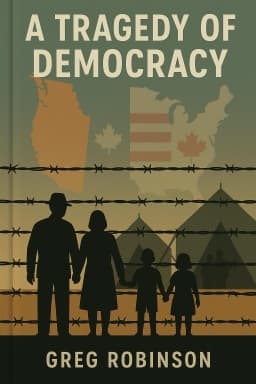
Greg Robinson
A detailed historical study of the forced removal and confinement of Japanese Americans and Canadians during World War II, exploring its causes, experiences, and lasting impact.
President Franklin D. Roosevelt referred to the camps as 'concentration camps' on two occasions before the term became associated exclusively with Nazi death camps.
2 more facts available in the app
Section 1
8 Sections
Imagine a time when a small group of determined individuals, the Gannen-mono, journeyed across the vast Pacific in 1868, stepping onto the shores of Hawaii to work as artisans on sugar plantations. These pioneers were the first of many Japanese immigrants who would come to North America, driven by hopes of better opportunities and a new life. Yet, their arrival was met with challenges that would persist for decades.
In the United States, laws such as the 1790 Immigration Act explicitly barred Asians from naturalization, leaving Japanese immigrants as permanent aliens without the rights of citizenship.
Meanwhile, anti-Japanese sentiment grew alongside economic competition. The Alien Land Acts, first passed in California in 1913 and later adopted by other states, forbade 'aliens ineligible for citizenship' from owning agricultural land. This legislation was a direct attack on the Issei's economic foothold and a message that they were unwelcome.
Yet, amidst these hardships, Japanese immigrants built vibrant communities. They established Japanese language schools, religious congregations blending Buddhism and Christianity, and businesses that served both their community and the wider public. The Nisei generation grew up navigating the complex identity of being American citizens with Japanese heritage, often caught between two worlds.
These early years laid the foundation for a story of resilience. The immigrants’ ability to adapt culturally and economically, while facing exclusion and prejudice, speaks to a profound strength.
As we move forward, we will explore how these early tensions and prejudices escalated into a wartime hysteria that culminated in the forced removal of Japanese Americans from their homes. This next chapter will unravel the events surrounding Pearl Harbor and the decisions that followed, forever altering the lives of thousands.
What was a major legal restriction faced by early Japanese immigrants in the U.S.?
15 more quizzes available in app
Understanding the initial migration and settlement of Japanese immigrants is crucial to grasping their later experiences.
8 more insights available in app
Unlock all 8 sections, 9 insights, full audio, and interactive mind map in the SnapBooks app.
Discover the deep roots, harrowing experiences, and lasting legacy of Japanese confinement in North America during WWII.
Read articleAn in-depth look at the policies and prejudices that fueled one of America’s gravest civil rights violations during World War II.
Read article