
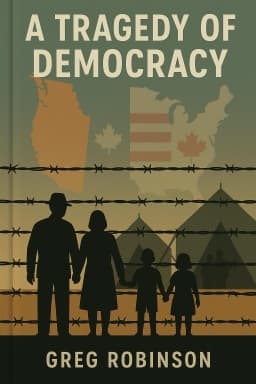
How a Nation Betrayed Its Own: The Shocking Story of Japanese Confinement in North America
An eye-opening exploration of the policies and personal stories behind the mass confinement of Japanese communities during WWII.

In the early 20th century, Japanese immigrants arrived in North America seeking opportunity and a new life. Yet, they soon found themselves subjected to laws that denied them citizenship and property rights, planting the seeds of systemic discrimination. When World War II erupted, these longstanding prejudices erupted into full-scale confinement. Over 110,000 Japanese Americans were uprooted from their homes, and thousands of Japanese Canadians faced similar fates. This betrayal of democratic principles is a stark reminder of how fear can undermine justice.
The attack on Pearl Harbor intensified suspicion and fear. Government officials, driven by racial bias and military pressure, swiftly enacted removal orders. Families were sent to assembly centers and then to remote internment camps, where they lived under constant surveillance and harsh conditions. Despite the adversity, internees maintained cultural traditions, established schools, and created newspapers, asserting their humanity against dehumanizing policies.
Many internees volunteered or were drafted into the military, serving with distinction in segregated units like the 442nd Regimental Combat Team. Their heroism challenged stereotypes and helped shift public attitudes. Yet, the community also faced internal conflicts over loyalty questionnaires and draft resistance, reflecting the complex realities of wartime confinement.
After the war, Japanese Americans and Canadians fought legal battles to overturn convictions and seek reparations. The landmark Civil Liberties Act of 1988 marked a significant victory, offering formal apologies and monetary compensation. The story of confinement also includes lesser-known experiences of Japanese Latin Americans deported to U.S. camps, highlighting a broader continental pattern of racial exclusion.
Today, memorials and educational programs ensure that this dark chapter is remembered and studied. The resilience of Japanese communities and their contributions to society stand as a testament to hope and justice. This history challenges us to guard democracy vigilantly and to confront prejudice wherever it arises.
Want to explore more insights from this book?
Read the full book summary