
The Dark Secret of WWII America: How Fear Led to the Mass Imprisonment of Japanese Americans
An in-depth look at the policies and prejudices that fueled one of America’s gravest civil rights violations during World War II.

World War II was a time of unprecedented global conflict, yet within the United States, a darker battle was waged on the home front—one fought against an entire ethnic group based on fear and prejudice. Japanese Americans, many of whom were citizens, were forcibly removed from their homes and confined in camps under harsh conditions. This mass imprisonment, a direct consequence of wartime hysteria and racial discrimination, represents one of the most egregious violations of civil liberties in American history.
The roots of this injustice lie in decades of anti-Asian sentiment and exclusionary laws that marginalized Japanese immigrants. Even before the war, Japanese Americans faced legal barriers such as the Alien Land Acts and were denied naturalization. These policies fostered an environment ripe for suspicion and scapegoating when the nation faced external threats.
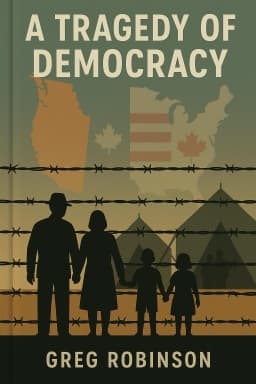
After the attack on Pearl Harbor, fear escalated into a frenzy. The government, influenced by military leaders and political pressure, authorized the removal of over 110,000 Japanese Americans from the West Coast. Families were sent to hastily constructed camps in remote locations, surrounded by barbed wire and guarded by armed soldiers. Life inside these camps was marked by overcrowding, harsh climates, and a loss of freedom that tested the endurance of internees.
Despite these conditions, internees demonstrated remarkable resilience. They built schools, published newspapers, and organized cultural and recreational activities to preserve their identity and morale. However, the community was not monolithic; divisions arose over loyalty questionnaires and cooperation with authorities, reflecting the complex realities of confinement.
In a profound paradox, many Japanese Americans served with distinction in the U.S. military, particularly the 442nd Regimental Combat Team. Their bravery challenged stereotypes and paved the way for civil rights advances. Yet, some resisted the draft in protest, underscoring the tension between patriotism and the demand for justice.
Legal battles continued long after the war ended. The Supreme Court’s Korematsu ruling upheld exclusion orders, but later decades saw successful efforts to overturn convictions and secure reparations through the Civil Liberties Act of 1988. These milestones represent not only legal victories but a reclaiming of dignity and historical truth.
Moreover, the story of confinement spans beyond the U.S., encompassing Canadian internment and Latin American deportations. This continental perspective reveals a widespread pattern of racial exclusion during wartime, broadening the narrative beyond national borders.
Remembering this dark chapter is crucial. It serves as a warning against allowing fear and prejudice to override constitutional rights and human dignity. The resilience of Japanese American communities and their ongoing contributions stand as a powerful testament to justice and hope.
Want to explore more insights from this book?
Read the full book summary