
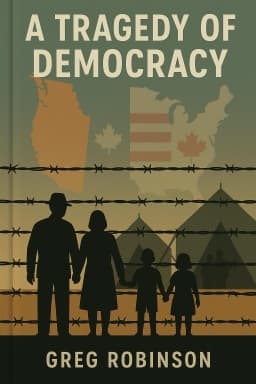
Unveiling the Untold Story: How Japanese American Internment Shaped Democracy’s Darkest Hour
Discover the deep roots, harrowing experiences, and lasting legacy of Japanese confinement in North America during WWII.

At the dawn of the 20th century, waves of Japanese immigrants crossed the Pacific, seeking new opportunities in the Americas. These early pioneers, known as the Gannen-mono, arrived with hopes of building better lives but soon encountered systemic barriers that foreshadowed the trials ahead. Alien Land Acts prevented many from owning property, and racial exclusion laws barred them from citizenship, laying a foundation of legal discrimination that would later justify their mass removal during World War II.
December 7, 1941, forever changed the trajectory of Japanese American lives. The attack on Pearl Harbor ignited a wave of suspicion and fear across the United States and Canada. Within days, community leaders were arrested, neighborhoods were surveilled, and martial law was declared in Hawaii. Despite scant evidence of disloyalty or espionage, the government moved swiftly to remove over 110,000 Japanese Americans from the West Coast, confining them in remote camps surrounded by barbed wire and armed guards.
The logistics of confinement were staggering. Families were uprooted from homes and businesses, sent first to temporary assembly centers like fairgrounds and racetracks, and then transported by train to isolated camps in deserts and mountain regions. Conditions were harsh—overcrowded barracks, extreme weather, and limited resources tested the resilience of internees. Yet, within these confines, vibrant communities flourished. Schools, churches, newspapers, and sports leagues blossomed, revealing the indomitable spirit of those imprisoned.
Amid confinement, thousands of Japanese Americans enlisted or were drafted into the U.S. military, forming units like the 442nd Regimental Combat Team, which became one of the most decorated in American history. Their valor in battle challenged prevailing stereotypes and helped shift public opinion. Yet, the community’s relationship with loyalty was complex; some resisted the draft in protest of their unjust treatment, highlighting tensions between patriotism and civil rights.
Postwar, the fight for justice continued through landmark legal battles. The Supreme Court’s Korematsu decision upheld exclusion orders, a ruling now widely condemned. Decades later, survivors and activists secured the Civil Liberties Act of 1988, which offered formal apologies and reparations. This redress movement emphasized not just financial compensation but also education and remembrance, ensuring that the lessons of confinement remain alive.
Japanese confinement was not confined to the U.S. alone. Canada removed and interned thousands of Japanese Canadians, confiscating their properties and deporting many after the war. Latin American countries also participated in deportations to U.S. camps. This continental perspective reveals a broader pattern of racial exclusion and wartime hysteria.
Today, memorials and museums commemorate the confinement experience, offering spaces for reflection and education. The Japanese American and Canadian communities have rebuilt and thrived, contributing richly to society. Their story is a cautionary tale about the fragility of civil liberties in times of fear and a call to protect democracy through empathy, justice, and remembrance.
Through this journey, we uncover a history that challenges us to confront prejudice and uphold human dignity, reminding us that democracy's strength lies in its commitment to justice for all.
Want to explore more insights from this book?
Read the full book summary