
Why 'A Whole New Mind' Will Change How You Think About Success Forever!
Unlock the Right-Brain Revolution to Thrive in Today’s Economy

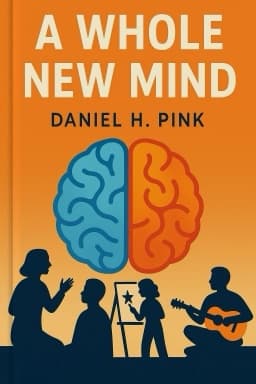
For decades, society has celebrated logical, analytical left-brain thinking as the path to achievement. But Daniel H. Pink’s A Whole New Mind flips that script, revealing a quiet revolution: the rise of right-brain skills that are becoming the new currency of success. This book isn’t just about neuroscience; it’s a manifesto for thriving in the Conceptual Age, where creativity, empathy, and big-picture synthesis eclipse rote logic and routine tasks.
Pink identifies six essential aptitudes—design, story, symphony, empathy, play, and meaning—that define the whole new mind. These are not just abstract qualities but practical skills that businesses crave and machines cannot replicate. For example, design is no longer a luxury but a critical business driver that blends function with beauty to create emotional connections. Storytelling shapes how we persuade and inspire, while symphony—the ability to synthesize ideas across disciplines—fuels innovation.
Empathy, grounded in neurological mechanisms like mirror neurons and the amygdala, is vital for leadership, healthcare, and collaboration. Playfulness fosters creativity and resilience, and the pursuit of meaning provides fulfillment beyond material success. Together, these aptitudes represent a balanced, integrated mind that thrives in complexity and change.
Why does this matter now? The forces of abundance, globalization, and automation are reshaping the economy. Routine, rule-based jobs are outsourced or automated, pushing workers to develop high concept and high touch skills. Pink’s insights are backed by research showing that top companies invest heavily in design and creativity, and educational institutions increasingly incorporate empathy and narrative medicine.
This blog draws on multiple sources to provide a rich understanding of these ideas and practical advice to cultivate your whole new mind. Whether you want to innovate at work, connect more deeply with others, or find greater purpose, embracing this right-brain revolution is your key to success.
Ready to transform your thinking and future? Let’s dive in.
1 , 2 , 3
Want to explore more insights from this book?
Read the full book summary