
Turning Setbacks into Stepping Stones: The Science of Resilience and Adaptation
How to Bounce Back Stronger and Smarter from Every Challenge

How to Bounce Back Stronger and Smarter from Every Challenge
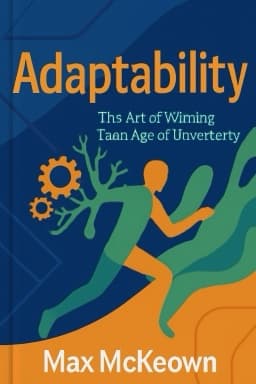
Everyone faces setbacks. The difference between those who succeed and those who struggle lies in how they respond. In 'Adaptability,' Max McKeown explains that resilience—the ability to recover and grow from adversity—is the foundation of all successful adaptation. Recent scientific research supports this, showing that resilience is not just an innate trait, but a set of skills that can be learned and strengthened.
The Psychology of Resilience
Resilient people are emotionally agile. They acknowledge their feelings, reflect on setbacks, and use them as fuel for growth. McKeown shares stories of athletes and entrepreneurs who turned devastating losses into comebacks by focusing on what they could control and letting go of what they couldn’t.
Turning Failure into Feedback
In adaptive cultures, failure is not the end—it’s the beginning of learning. Teams that regularly review mistakes and celebrate lessons learned are more likely to innovate and succeed in the long run. McKeown points to companies that use 'post-mortems' to dissect failures and develop smarter strategies.
Support Networks and Reflection
Resilience is rarely a solo effort. Support from friends, mentors, and colleagues makes recovery faster and more sustainable. Reflective practices—like journaling or group debriefs—help individuals and teams process setbacks and plan next steps.
Practical Tools for Building Resilience
- Reframe challenges as opportunities for growth
- Practice gratitude to build optimism
- Experiment playfully to reduce fear of failure
- Seek feedback and support from others
Conclusion
Setbacks are inevitable, but suffering is optional. With the right mindset and tools, every challenge becomes a stepping stone to greater adaptability and success.
Sources: 1 3 4
Want to explore more insights from this book?
Read the full book summary